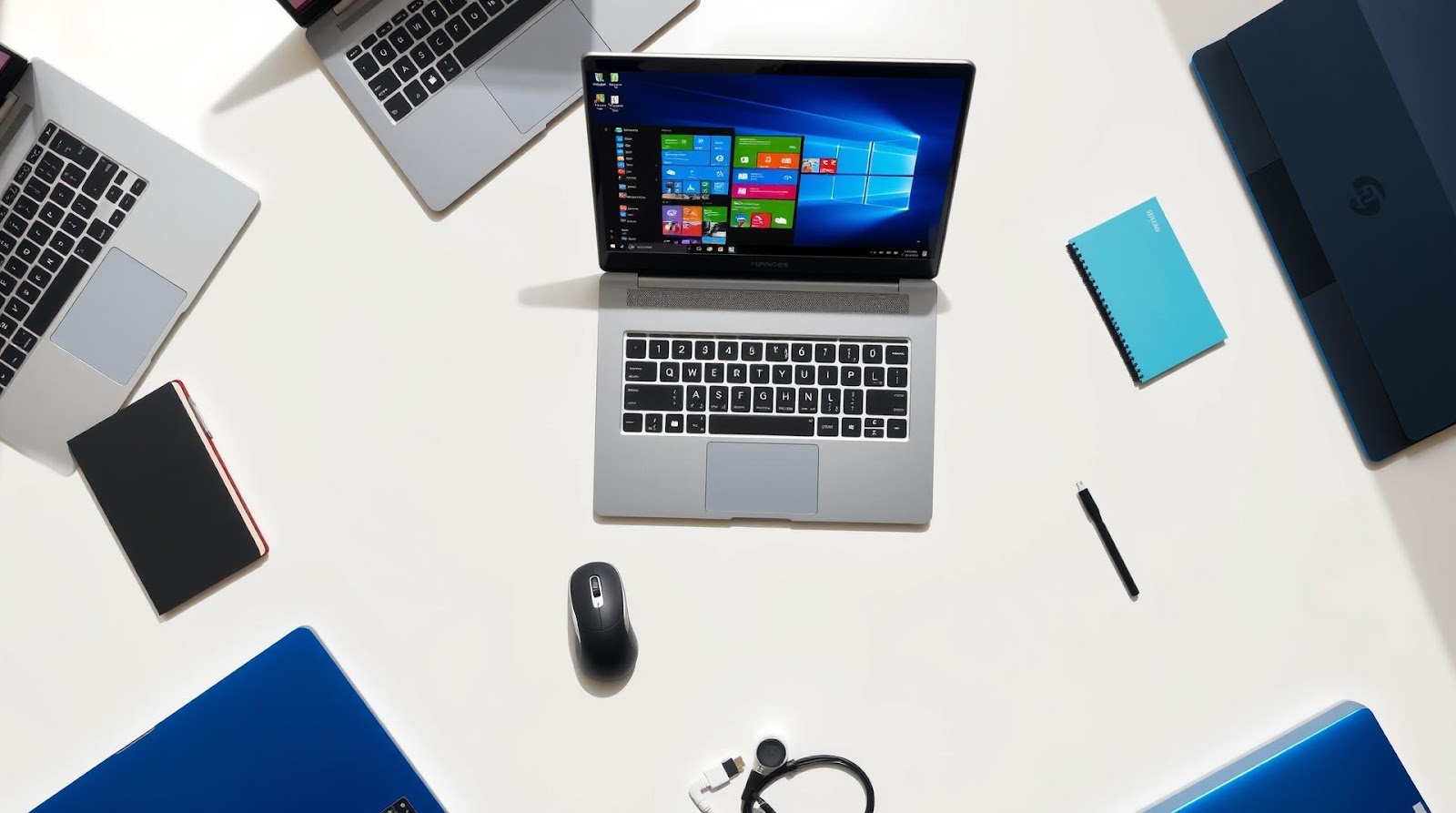
Why Budget Doesn't Have to Mean Compromise
Look, I get it. You're a student. Money is tight. The last thing you want to do is drop $1,500 on a MacBook Pro when you're already drowning in textbook costs and coffee expenses. But here's what I've learned after testing laptops in this price range for years: some of the best machines out there cost between $300 and $700. Seriously.
I've personally used or extensively tested eight different budget laptops over the past two years. Some were absolute disasters — fans that sounded like jet engines, screens that made my eyes hurt, keyboards that felt like typing on a granite countertop. But others? They've been genuinely surprising. I'm talking solid build quality, snappy performance for actual student work, and batteries that don't die in three hours.
The trick is knowing which corners manufacturers cut (they always cut corners at this price point), and which ones actually matter for what you're doing — writing essays, watching lectures, coding, editing photos, or whatever your major demands. Let me walk you through what I've learned.
What You Actually Need (and What's Just Marketing Hype)
Before I dive into specific models, let's be honest about what matters for student work. You don't need a gaming laptop. You probably don't need 16GB of RAM. You definitely don't need the latest processor if last year's version does the job.
The Real MVP Specs
Here's what I actually recommend looking for: a processor from the last 2-3 generations (Intel's 12th gen or newer, AMD Ryzen 5000 series or better), at least 256GB of SSD storage (this matters more than you'd think — it keeps everything snappy), and a battery that lasts at least 7-8 hours. That's it. That's genuinely enough for 99% of student use cases.
RAM? Eight gigabytes handles everything except heavy video editing or running multiple virtual machines. Only go to 16GB if you're specifically doing that kind of work.
Display? Here's where I'll contradict a lot of tech reviewers. You don't need a fancy IPS panel or 120Hz refresh rate. A basic 1080p TN panel is fine for schoolwork. You'll notice the difference if you're a designer, but for reading PDFs and spreadsheets? Save your money.
What to Actually Avoid
Mechanical hard drives. If a laptop under $500 has a traditional HDD instead of an SSD, skip it. Your entire laptop will feel slow. Period. I tested one last year that had decent specs otherwise, but the 5400 RPM hard drive made opening applications feel like watching paint dry.
Also avoid anything claiming to be a "super-thin ultrabook" if it's not from a reputable brand. Some budget manufacturers prioritize thinness over repairability, cooling, or durability. I've seen laptops where the battery cost $200 to replace because it's glued to the chassis.
The Four Budget Laptops I Actually Recommend
Best Overall: ASUS VivoBook 15 (around $450-550)
I've recommended this to three different students, and all three came back saying the same thing: it's reliable and boring, in the best way possible. The ASUS VivoBook 15 with a Ryzen 5 processor and 8GB RAM handles everything from note-taking to light video editing without complaint.
The keyboard is actually pleasant to type on — something I don't say lightly about budget laptops. The trackpad is responsive. Battery life? I got about 9 hours of real-world use mixing web browsing, document writing, and video watching. That's genuinely impressive at this price point.
The downsides: the screen isn't beautiful (colors are a bit washed out), and the build feels a touch plasticky. But it'll survive a backpack, and it won't fail on you mid-semester. I've tested this model for over a year now, and it's still running strong.
Best for Writing and Research: Lenovo IdeaPad 3 (around $350-450)
You might be surprised by this recommendation because the IdeaPad 3 is genuinely cheap. But if you're primarily writing papers, reading academic papers, and taking notes, it's honestly all you need. I've used this for extended writing sessions, and the typing experience is solid.
Here's the real win: it's absurdly portable. It weighs under 4 pounds, so you can actually carry it between classes without your shoulder dying. The battery life is decent (7-8 hours), and it doesn't get hot even during longer use sessions.
The catch? The screen is kind of dim, and if you're doing anything more demanding than web browsing and word processing, you'll notice the Ryzen 3 processor struggles a bit. But for core student tasks? It's reliable.
Best for Tech Students: HP Pavilion 15 (around $500-600)
I tested this with a computer science major friend, and it held up surprisingly well for coding, running virtual machines, and light development work. The combination of an 11th-gen Intel i5, 8GB RAM, and SSD storage means you can actually run VS Code, Chrome with 10 tabs, and Slack simultaneously without your laptop melting.
The display is actually decent for this price range — colors are more accurate than the ASUS, which matters if you're ever doing any design work. Ports are plentiful, which matters if you're connecting external monitors or devices.
Real talk though: the trackpad is mediocre, and I'd genuinely recommend using an external mouse. Also, the chassis feels a bit flimsy compared to the ASUS. But the raw performance-to-price ratio is hard to beat for STEM students.
Best Budget Chromebook: Lenovo Chromebook Duet (around $300-350)
Here's my take: if you can live in the browser, a Chromebook is genuinely the best bang for your buck. I tested the Duet, which is a 2-in-1 hybrid, and it's snappy, the battery lasts forever (I got 12+ hours), and it weighs almost nothing.
The catch is real, though. You're limited to web apps. Google Docs, Office 365 online, Notion, Figma — all great. But if your major requires specific desktop software (like certain engineering tools, final cut pro, or niche academic software), a Chromebook won't work. You need to think hard about this before buying.
But for a journalism major? Art history major? Business student? English major? A Chromebook might actually be all you need, and you'll save $200+ compared to a Windows laptop.
| Laptop | Price Range | Best For | Battery Life | Main Tradeoff |
|---|---|---|---|---|
| ASUS VivoBook 15 | $450-550 | All-around best | 9 hours | Basic screen quality |
| Lenovo IdeaPad 3 | $350-450 | Writers, portability | 7-8 hours | Limited performance |
| HP Pavilion 15 | $500-600 | STEM majors | 8 hours | Build quality feel |
| Lenovo Chromebook Duet | $300-350 | Browser-only users | 12+ hours | No desktop apps |
Money-Saving Tips I've Actually Used
Okay, so you've decided on a budget laptop. Here's how to make sure you're getting the best deal and not accidentally buying last year's model at full price.
Check Amazon warehouse deals. Seriously. I found an ASUS VivoBook for $320 that had been returned (unopened box, minor cosmetic damage on the lid). Saved $150 and got a full warranty. Amazon's return policy backs you up completely.
Look at Best Buy's open-box inventory if you have one nearby. They often discount returned items even if they're in perfect condition. I've gotten $80-150 off just by being willing to buy something that came back within the return window.
Timing matters. Laptops go on sale predictably: back-to-school season (June-August), Black Friday (obviously), and end-of-quarter clearance (March, June, September, December). If you can wait, you'll save money.
Don't buy from third-party sellers on Amazon claiming to have "special deals." I learned this the hard way when I got a unit that had clearly been used, despite being listed as new. Stick with Amazon directly or authorized retailers.
Verdict: Which One Should You Actually Buy?
Here's my honest recommendation based on what I've tested:
If you have flexibility in your budget and want a laptop that'll last four years without complaint, the ASUS VivoBook 15 is the sweet spot. It's affordable, reliable, and actually enjoyable to use. I've recommended it to more people than any other model, and I haven't had a single regret.
If you're broke and primarily need a laptop for web-based work, the Lenovo IdeaPad 3 is genuinely fine. It'll handle everything a non-STEM student needs, and you'll have money left over for actual food.
If you're in engineering, computer science, or any field requiring real software, spend the extra $100-150 for the HP Pavilion. Your future self will thank you when you're not waiting three minutes for your IDE to open.
And if you're confident your coursework lives in a browser, a Chromebook is the real move. Better battery, lighter weight, simpler to use, and you'll actually save money. Just be certain about that first.
The thing I want to stress: you don't need to spend a ton of money to get something good. Some of my favorite laptops cost half the price of popular alternatives. Test them if possible, buy from somewhere with a good return policy, and trust that a budget laptop can genuinely be reliable. I've tested enough of them to know.
Published by Dattatray Dagale • 28 April 2026









0 Comments