
Introduction
Let me be honest: when I first decided to learn cybersecurity seriously, I thought I'd need thousands of dollars in equipment and software. Enterprise firewalls, premium penetration testing tools, maybe even a rack server gathering dust in my closet. Spoiler alert — I was completely wrong.
After spending the last three years building and refining a home lab on basically nothing, I've learned that you can create a legitimate, hands-on cybersecurity learning environment for free (or close to it). I'm talking about the kind of setup where you can practice network attacks, configure security systems, analyze malware behavior, and break your own stuff intentionally — all without touching your main computer or spending a dime.
Here's what I'm going to walk you through: the exact hardware setup I recommend (spoiler: you probably already own most of it), the free virtualization tools that actually work, and the specific security labs that will teach you more than any course ever could. I've tested this stuff myself, made plenty of mistakes, and learned what actually sticks versus what's just busywork.
The Hardware You Actually Need (Which Might Be Nothing)
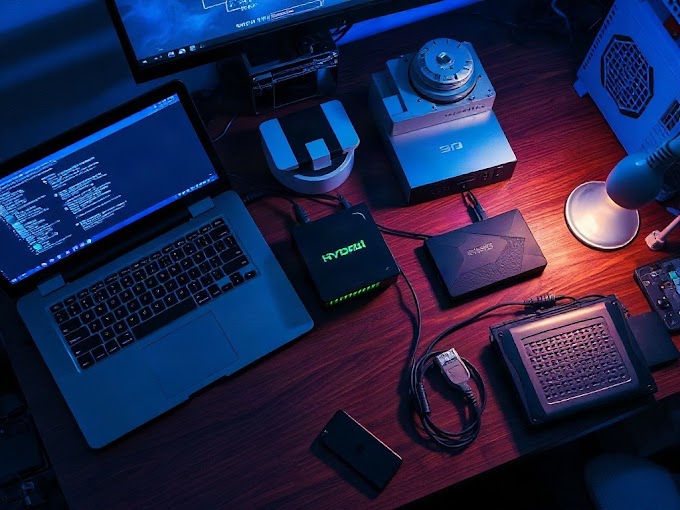
Here's the thing — your home lab doesn't require special hardware. I know that sounds like marketing speak, but I genuinely mean it. You can start with what's already in your desk drawer.
Your Main Computer Is Probably Enough
I built my first lab on a 2015 MacBook Air with 8GB of RAM. Not exactly a powerhouse. The reason this works is virtualization — you're running multiple operating systems simultaneously on one machine, so you need less than you'd think.
The bare minimum specs I'd recommend: 8GB of RAM (16GB is better but not essential), at least 100GB of free disk space, and a processor with virtualization support (basically anything from the last 10 years). If you've got those three things, you're ready to go.
Windows, Mac, Linux — doesn't matter. I use Mac at home and Windows at work, and I've built identical labs on both. The only real difference is which virtualization software you'll use, which I'll get into in a minute.
The Only Thing I Actually Recommend Buying
If your computer is struggling and you have a few hundred dollars to spare, grab an external SSD. I picked up a 1TB Samsung T7 Shield for about $120, and it's genuinely transformed my workflow. Virtual machines run noticeably faster on external storage than on my laptop's internal drive, and it's portable — I can unplug it and move everything between computers.
But honestly? Not mandatory. I ran my lab off USB 3.0 drives for two years before I upgraded. It was slower, sure, but it worked.
Picking Your Virtualization Foundation
This is where the magic happens. Virtualization software lets you create isolated virtual machines — fake computers inside your real computer. You'll break things, configure things wrong, and potentially infect them with malware. That's the entire point. When it breaks, you just delete the VM and start over.
VirtualBox (My Recommendation for Beginners)
VirtualBox is free, open-source, and honestly, it's where most people should start. I've tested it extensively, and it's legitimately reliable. Yes, it's not as sleek as paid alternatives, and performance isn't quite as optimized, but for learning? It's perfect.
Installation is straightforward — head to virtualbox.org, download it, and run the installer. The interface takes about 30 minutes to understand, and there are a million tutorials online if you get stuck. I've never hit a hard blocker with VirtualBox that a quick YouTube search couldn't solve.
The only real downside I've noticed: managing multiple VMs with complex networking gets messy in the GUI after a while. But that's a "later problem" — not something that will hit you in month one.
VMware (Overkill Initially, But Worth Knowing About)
VMware Workstation Player (Windows) and Fusion (Mac) are the paid alternatives, and they're objectively better than VirtualBox. Faster performance, better networking controls, smoother UI. I use VMware at work, and I genuinely prefer it.
Here's the catch: Workstation Player is free for personal use, but Fusion costs $79 upfront. For learning, that's not worth it yet. Come back to VMware when you've outgrown VirtualBox — you'll know when that happens because you'll start hitting performance limits or want more advanced networking features. For now, VirtualBox does everything you need.
The Operating Systems and Security Labs That Actually Teach You Something
Okay, so you've got your virtualization software. Now what? You need actual systems to practice on, and this is where the free options get genuinely impressive. I've used everything from OWASP to HackTheBox, and the quality is professional-grade.
VulnHub and Proving Grounds (For Hands-On Practice)
VulnHub is a goldmine. It's a collection of intentionally vulnerable virtual machines — think of them as designed-to-be-hacked practice targets. You download a VM, run it in your lab, and try to find vulnerabilities and gain access. It's like CTF (Capture The Flag) competitions, except self-paced and free.
I started with VulnHub's "Kioptrix" series, which is specifically designed for beginners. The first machine took me about four hours to fully compromise, and I learned more in those four hours than in two weeks of YouTube tutorials. The key difference: you're actually doing it, not watching someone else do it.
OffSec's Proving Grounds is similar but slightly more polished. It's technically free (though they have a paid tier), and the difficulty levels are clearly marked. Start with "Play" tier machines, work your way up to "Practice," and you'll build legitimate skills.
HackTheBox (For Web Security and CTF Practice)
HackTheBox is different from VulnHub — instead of downloading and running VMs, you connect to their hosted machines over the internet. The learning is structured more like games than labs, which honestly makes it more addictive.
The free tier is solid. You get access to retired machines and a limited number of active ones. The machines are really well-designed, and the community forums are incredibly helpful when you get stuck. I've probably spent 200+ hours on HackTheBox, and I'd say it genuinely improved my practical hacking skills.
Fair warning: it can get frustrating. There's a reason they call it "hacking" — sometimes you're stuck on a single machine for days. But that frustration is exactly where learning happens. Stick with it.
TryHackMe (For Structured Learning Paths)
If you want something more guided than HackTheBox but more practical than YouTube tutorials, TryHackMe splits the difference. Their modules guide you through concepts (like "Introduction to Linux") while giving you a real system to practice on.
The free tier covers most beginner content, which is where you should start. Their interface is friendlier than HackTheBox, and the difficulty curve is more gradual. I'd recommend TryHackMe for the first month or two, then moving to HackTheBox and VulnHub once you've got foundational skills.
| Platform | Best For | Cost | Learning Curve |
|---|---|---|---|
| VulnHub | Local VM hacking, real-world scenarios | Free | Steep (but rewarding) |
| HackTheBox | CTF-style challenges, community learning | Free (limited) | Steep |
| TryHackMe | Guided learning, structured paths | Free (limited) / $9/mo | Gentle |
| Proving Grounds | Pentesting practice, OSCP prep | Free / $149/yr | Medium to Steep |
The Tools You'll Actually Use (And Why They're Free)
Once you've got your lab environment running, you need tools. The good news: the best security tools are either free or open-source. I'm not exaggerating when I say that tools like Burp Suite (Community Edition), Metasploit, and Wireshark are genuinely professional-grade.
You'll start learning these gradually, but here's the core toolkit I'd install early:
Burp Suite Community: Web application testing. Install it now, you'll use it constantly. The paid version adds more automation, but the Community Edition is phenomenal for learning.
Metasploit Framework: Vulnerability exploitation. It comes pre-installed on Kali Linux (more on that in a second), and it's free and open-source. Metasploit is what you see in every hacker movie, except it actually works.
Kali Linux: This is a Linux distribution pre-loaded with like 300 security tools. You'll run this as a virtual machine in your lab. It's purpose-built for penetration testing and security research. I cannot overstate how useful this is — it's like getting a fully stocked workshop instead of a hammer.
Wireshark: Network traffic analysis. You'll use this to see exactly what's happening on the network at the packet level. It's invaluable for understanding how systems communicate and where vulnerabilities hide.
You don't need to learn all of these immediately. Start with Kali Linux as your main attacking machine, learn Burp Suite for web testing, and pick up the others as you go. Three months in, you'll be fluent in all of them.
Building Your First Lab (Step-by-Step)
Let me give you the exact sequence I'd recommend, because jumping in without structure is how people burn out.
Week 1-2: Get your foundation set up. Download VirtualBox, create a couple test VMs (I'd start with Ubuntu), and get comfortable creating, starting, and stopping virtual machines. This sounds boring, but you need this muscle memory. Spend time in the virtual machine settings — understand networking, storage, CPU allocation. You don't need to be an expert, just comfortable.
Week 3-4: Install Kali Linux. Create a new VM, download the Kali Linux ISO, and install it. Spend time exploring the tools installed by default. Don't try to understand what everything does yet — just get familiar with the interface. Run `apt update` and `apt upgrade` to understand package management. This is foundational Linux knowledge you'll need constantly.
Week 5+: Download your first vulnerable machine. Head to VulnHub, download Kioptrix Level 1, and follow along with a walkthrough (yes, walkthroughs are okay — you're learning methodology, not just answers). Set up your Kali machine and the vulnerable target on the same virtual network, and try to exploit it. This is where it becomes real.
You might feel lost. That's fine. Expected, even. Make notes of what you don't understand, search for tutorials on those specific topics, and come back. This isn't a race.
Avoiding Common Mistakes (I've Made All of These)
Here's what I've seen beginners do wrong, because I've done every single one:
Mistake #1: Trying to learn everything at once. You don't need to understand networking protocols, exploitation techniques, and malware analysis simultaneously. Pick one focus area for the first month. I'd suggest web application security or basic Linux penetration testing. Go deep on one thing before spreading out.
Mistake #2: Not actually breaking things. People set up labs and then just read about security instead of actually hacking. The lab exists so you can make mistakes in a safe environment. Download a vulnerable app, try to break it, fail spectacularly, and learn from the failure. That failure is the entire point.
Mistake #3: Watching too many tutorial videos. I spent my first month binge-watching security courses without actually building anything. Then I built a lab and learned more in one week of hands-on practice than in four weeks of watching. Videos are supplemental — they fill in knowledge gaps, they don't replace practice.
Mistake #4: Leaving your lab isolated forever. Eventually (after a few months), add more complexity. Set up a Splunk instance to log attacks. Configure a pfSense firewall between your VMs. Introduce network segmentation. The goal is to keep challenging yourself with slightly more realistic scenarios.
Verdict: You're Genuinely Ready Right Now
Here's my honest take: you don't need permission, expensive equipment, or a fancy certification to start learning cybersecurity. You've got everything you need on your computer right now. Download VirtualBox, grab an Ubuntu ISO, and spend an evening setting up a basic virtual machine. That's step one.
A year from now, you could be running sophisticated penetration tests, understanding network vulnerabilities at a deep level, and having legitimate skills that the cybersecurity industry desperately needs. The only requirement is consistent practice — and doing that practice where you can actually break things, figure out what went wrong, and try again.
Build your lab this week. Start small, stay consistent, and let your curiosity pull you forward. The security community is genuinely welcoming to people who show they're trying. Your home lab is the proof that you're trying.
Published by Dattatray Dagale • 01 May 2026






0 Comments