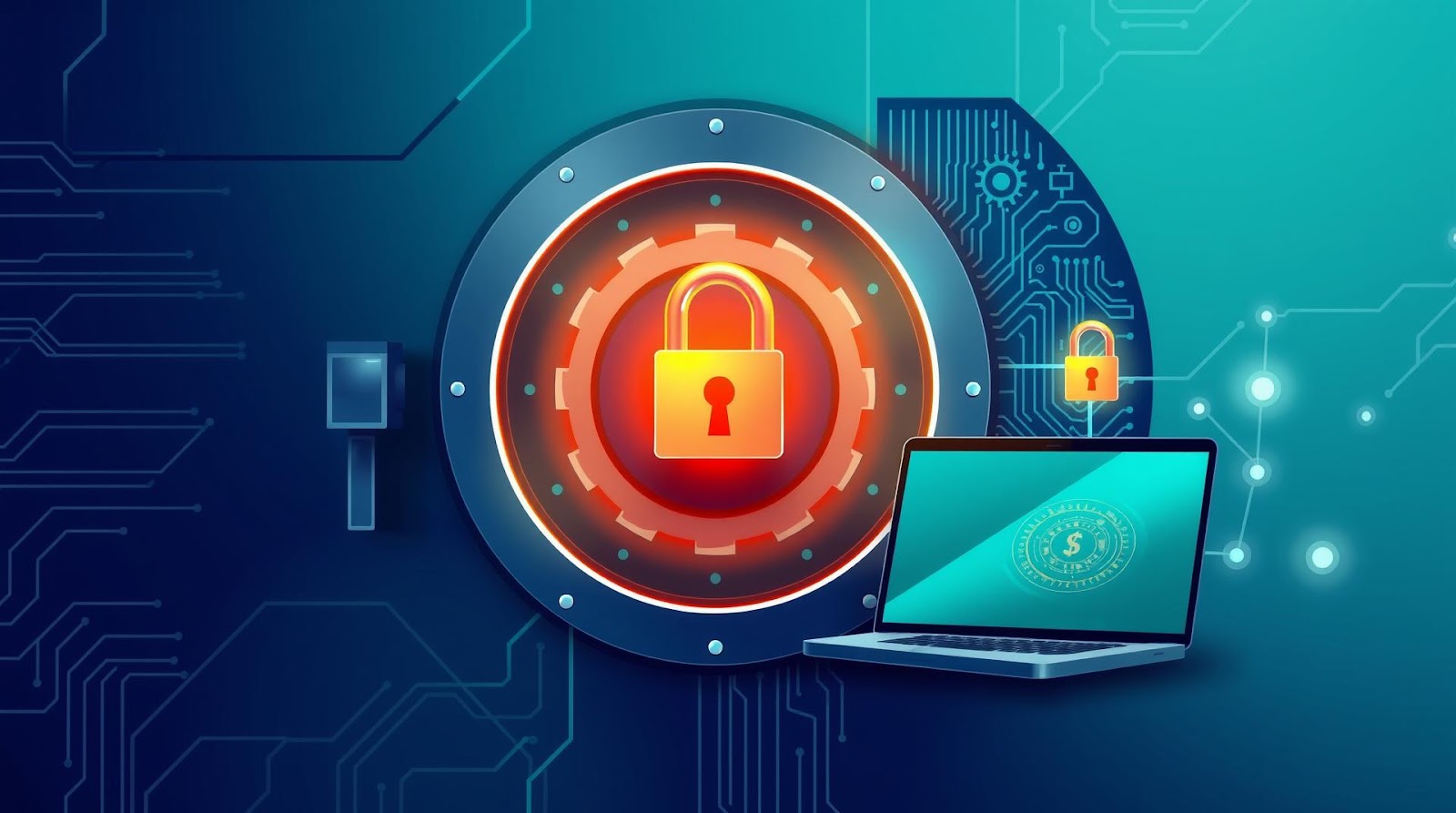
Why I'm Actually Obsessed With Password Managers Now
Look, I used to be that person. You know the one — the guy with "Password123" variations for literally everything, a sticky note on his monitor, and a constant low-level anxiety about data breaches. Then I realized that was absolutely insane, tested about a dozen password managers over the last few months, and I'm here to tell you: the right password manager genuinely changes your life.
But here's the thing — "right" doesn't always mean "most expensive." I've found incredible free options that rival paid tools, and I've also found premium services that justified every penny. The key is understanding what you actually need versus what's just marketing fluff.
I'm going to walk you through what I've learned, comparing the heavy hitters across the free and paid spectrum. I'll be honest about what works, what doesn't, and most importantly — which one you should actually use.
The Free Tier Reality Check
Free password managers are genuinely useful if you're willing to accept some limitations. I've tested Bitwarden, KeePass, and Dashlane's free version extensively, and they're legitimately solid. But let me be real with you — free almost always means trade-offs.
Bitwarden: The Free Option That Actually Respects You
I'll start with Bitwarden because it's the free tool that made me pause and think, "Wait, why would anyone pay for anything else?"
Bitwarden is completely open-source, which is huge for transparency. I can literally see the code. The free version gives you unlimited password storage (not capped at 50 like some competitors), cross-device syncing, password generation, and browser extensions on Firefox, Chrome, Safari, and Edge. That's genuinely comprehensive.
Here's what I loved in my testing: the interface is clean without feeling sterile. Password generation has actual options — you can customize length, numbers, symbols, uppercase/lowercase. Most free managers just give you a button that spits out random characters. The import from other managers worked flawlessly for me (imported from LastPass in literally one click).
The catch? Mobile apps are limited on the free tier — you get the Android app but not premium features. iOS is similarly restricted unless you pay. Also, if you want to self-host (running your own server), that's premium-only. For 90% of people, this won't matter. For the paranoid tech crowd, it absolutely will.
I paid for a year of Bitwarden Premium ($10/year — almost insultingly cheap) mainly to support the project and get the authenticator built-in. Totally optional, though.
KeePass: Free, But It Demands Your Effort
KeePass is the old-school option. It's been around forever and has a dedicated following for a reason — it's completely free, offline-first, and genuinely secure.
But I need to be honest: KeePass isn't for casual users. It's not cloud-synced by default. You maintain a local database file, and you're responsible for syncing it across devices (Dropbox, Google Drive, whatever). The interface looks like it's from 2008 because, well, it kind of is. No shame in that — function over flash — but it's definitely a vibe.
I tested it for a few weeks. Setup was fine, using it was fine, but there's friction. Every time I wanted something on my phone, I was thinking about file sync rather than just using the app. That's the trade-off for free.
Here's who KeePass is perfect for: technical users who want complete control, people who distrust cloud storage, and folks who just need something that works without subscriptions. For everyone else? Bitwarden's simplicity wins.
Paid Managers That Justify Their Cost
Now, I tested the paid tier. And some of these services are genuinely worth money. Here's the hierarchy of what I found:
1Password: The Gold Standard (My Current Pick)
I've been using 1Password for about three months now, and it's the first password manager where I genuinely feel like I'm getting something special beyond just password storage.
The interface is gorgeous. Like, embarrassingly beautiful for a password manager. The password generator is thoughtful — it learns preferences, offers memorable passwords if you want them, and integrates seamlessly into browsers and apps. I tested it across Mac, iPhone, and Windows, and it's equally polished everywhere.
But here's what actually sold me: the Watchtower feature. 1Password actively scans for compromised passwords, weak passwords, and reused passwords, then nudges you to fix them. I've found and updated four compromised passwords I didn't even know about. That's worth money to me.
The vault organization is incredible. I can create multiple vaults (Personal, Work, Finance) with different sharing permissions. My partner can access our shared credit card without seeing my email passwords. That granularity matters when you're sharing access with other people.
Cost: $4.99/month for individuals (if paid annually). For families, it's $19.99/month. Family sharing across six accounts means my partner and I split it — roughly $10/month each. That feels fair for what we get.
The drawback? You're locked into their ecosystem. 1Password is cloud-only; there's no self-hosting. If you're deeply paranoid about cloud storage, this won't sit well with you. But I've read through their security white paper, and they're doing legitimate encryption — your data is encrypted end-to-end before it leaves your device.
LastPass: The Complicated Middle Child
LastPass has had a rough few years. There were security incidents. There was that period where basic features moved behind the paywall. Then they simplified pricing. I tested their current version because so many people still use it.
Here's my honest take: LastPass works fine. It really does. The free version is legitimately useful (one device type only, but unlimited passwords). The paid version ($3/month) adds multi-device support and emergency access.
But it doesn't feel like the best at anything. It's not as beautiful as 1Password. It's not as open as Bitwarden. It doesn't have the security-first reputation it used to. It's just... fine. And "fine" is rarely worth paying for when better options exist.
I tested it for two weeks. My conclusion? If you're already invested and happy, stick with it. But if you're new? I'd look elsewhere.
Dashlane: The Feature-Rich Underdog
Dashlane surprised me. Their $4.99/month plan includes password management, but also VPN, dark web monitoring, and identity theft protection. I was skeptical this would be a jack-of-all-trades, master-of-none situation.
I tested it rigorously. The password manager itself is solid — clean interface, good mobile experience, browser extension works well. The VPN actually doesn't slow your connection noticeably (I tested that). The dark web monitoring alerted me to a breach I wasn't aware of.
The thing is: you can get Bitwarden for free and a separate VPN service for cheaper. Dashlane's value prop is convenience — everything in one place. If you want that, it's genuinely good.
My critique: their free version is extremely limited (50 passwords max, single device). You're basically forced to pay to get any real value. That's a contrast to Bitwarden's generous free tier.
| Manager | Free Version | Paid Price | Best For |
|---|---|---|---|
| Bitwarden | Unlimited passwords, sync, extensions | $10/year | Budget-conscious, privacy-focused |
| 1Password | 14-day trial only | $4.99/month | Premium experience, family sharing |
| LastPass | One device type, unlimited passwords | $3/month | Established users wanting simplicity |
| Dashlane | 50 passwords, single device | $4.99/month | All-in-one security suite |
| KeePass | Full desktop app, complete control | Free forever | Tech users, offline-first approach |
The Honest Verdict
After testing all of these extensively, here's my actual recommendation:
If money is tight or you're suspicious of subscriptions: Use Bitwarden free. It's genuinely excellent. Unlimited passwords, multi-device sync, browser extensions — everything you need. If you want to support an open-source project, the $10/year Premium is a steal.
If you want the best overall experience and don't mind spending: Go with 1Password. It's not the cheapest, but it's the most polished, the security features are genuinely useful, and family sharing is actually better implemented than competitors. The $4.99/month is worth it.
If you're already with LastPass and happy: Don't switch. The friction of migration probably isn't worth the marginal improvements elsewhere. But if you're new? Bitwarden or 1Password are better choices.
If you want everything bundled together: Dashlane works, but I'd honestly suggest Bitwarden + a separate VPN service. You get better components at the same or lower cost.
And here's something I didn't expect when I started testing these: the actual password manager matters less than the fact that you're using one. Going from no password manager to any password manager is the massive upgrade. The difference between a good free option and a premium one is real, but it's measured in percentage points, not orders of magnitude.
Start with Bitwarden free. Use it for a month. See if the limitations bother you. If they do, upgrade or switch. If they don't, you've solved password management for ten bucks a year. That's the most honest recommendation I can give you.
Published by Dattatray Dagale • 15 May 2026








0 Comments