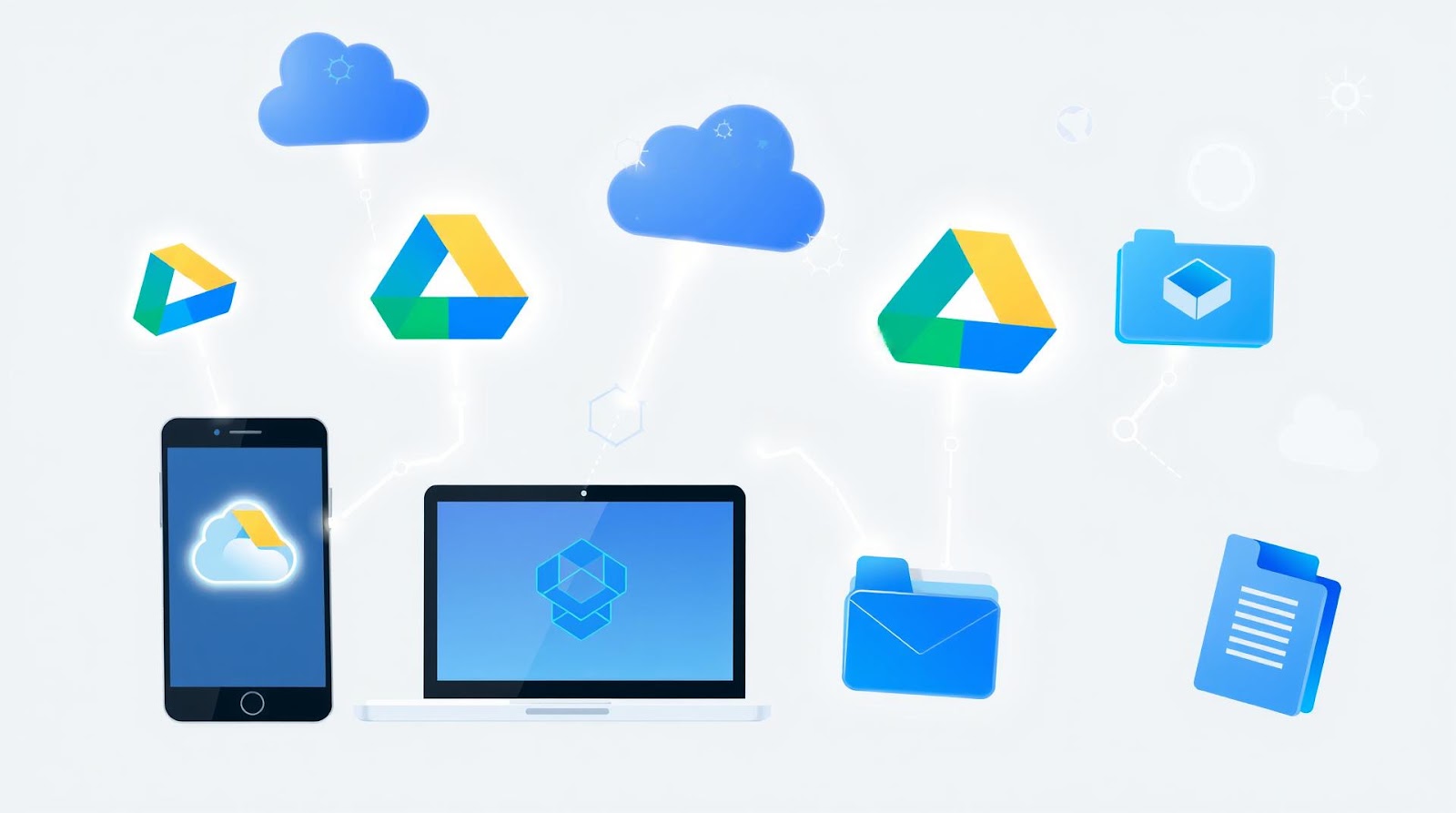
I've lost files. Not metaphorically — actual documents, photos, spreadsheets gone because I trusted the wrong cloud service or didn't understand the fine print. So when people ask me about free cloud storage now, I don't just list options. I tell them what I've learned the hard way.
The truth? Free cloud storage works. But it's not one-size-fits-all, and some of these services are banking on you never actually hitting their limits or reading their privacy policies.
Let me walk you through what actually works in 2025, what's worth your time, and what's just taking up space on your device.
The Honest Reality of Free Cloud Storage
First things first: free cloud storage is not charity. These companies make money by either upgrading you to paid plans, analyzing your data, or both. Google reads your emails to serve ads. OneDrive integrates with Microsoft's ecosystem so deeply that you'll eventually want their paid products. Dropbox makes their free tier so limited that switching to paid feels inevitable after a few months.
That's not inherently bad. Just be aware.
The second reality? 5GB is actually quite small. I used to think it was generous. Now I know better. A single 4K video from your phone can be 500MB. A full backup of your documents? Gone in minutes. So don't judge these services by raw storage alone — judge them by what you actually need to store.
Third point, and this matters for people in India specifically: not all services work equally well on slower connections. Google Drive is weirdly resilient. Dropbox sometimes struggles on 3G. Sync.com can be frustratingly slow during peak hours. I learned this while traveling, not in my home office.
Why I'm Recommending Multiple Services Instead of One
I used to chase the "best" single solution. That was stupid. Here's what actually works: use a combination. Keep your core files on one service, specific documents on another, photos somewhere else. This spreads risk (if one goes down, you're not entirely screwed) and lets you use each service for what it does best.
I currently use Google Drive for shared documents, OneDrive for Windows backups, and Dropbox for client files. Three services. Three reasons. This approach has saved me more than once.
The Best Free Cloud Storage Services Worth Your Attention
Google Drive — Still the Practical Default
15GB free. Integrates with Google Docs, Sheets, and Slides (which is kind of the point). File sharing is intuitive. The mobile app actually works without rage-quitting.
Here's why I still use it: collaborative editing. If you're sharing documents with colleagues or classmates, Google Drive is just objectively better than the alternatives. Real-time collaboration, comment threads that don't feel clunky, version history that actually saves you sometimes.
The privacy concern is real though. Google scans your files. They say it's for spam detection and security, which is probably true, but it's worth knowing. If you're storing sensitive documents, Google Drive is not your primary vault.
Also: that 15GB limit. It includes Gmail storage. So if you've been using Gmail for 10 years with lots of attachments, you might already be at 12GB. I learned this when Drive suddenly told me I was almost full.
OneDrive — Best if You're Already in Windows
5GB free. But here's the catch that makes it better than it sounds: if you use Windows 11, OneDrive feels like it's just part of your computer. File syncing is seamless. Recovery options are excellent.
I switched my main computer to sync everything through OneDrive, and it saved me when my laptop hard drive started failing. Microsoft's backup and recovery features actually worked, and I didn't lose anything.
The downside? 5GB is painfully small. And if you're on Mac, it feels like an afterthought. The iOS integration is decent but not magical. It's built for Windows users, and that's fine — just know what you're getting.
Also, they keep trying to sell you OneDrive+ (100GB for ₹50/month in India, around $6 USD). The free tier almost forces you into thinking about upgrading.
Dropbox — For People Who Need Simplicity
2GB free (yes, really, only 2GB). But Dropbox has something others don't: reliable syncing across devices that just works. It's the boomer of cloud storage — not flashy, but reliable.
The reason to use Dropbox? File versioning and recovery. You can recover any file from the last 30 days for free. I accidentally overwrote an important document once, and Dropbox let me get it back instantly. That feature alone has value.
But 2GB is genuinely limiting. You can increase it to 3GB by referring friends (the old-school way). Many people skip Dropbox because of this cap, which is fair. I mostly use it for small, critical files and nothing else.
Proton Drive — For Privacy-Conscious People
1GB free. Yes, it's tiny. But here's why I mention it: everything is encrypted end-to-end, even on their servers. Proton can't read your files. Neither can government agencies (theoretically).
If you're storing sensitive personal documents, financial records, or anything you don't want scanned by algorithms, Proton Drive is worth the tradeoff of smaller storage.
Speed is reasonable. The interface is clean. The company's model is subscription-based, so they're not mining your data. It's purpose-built for people who care about privacy.
But realistically? 1GB is a joke for most people. You'll hit that limit in a week if you're actually trying to use it. So this is for specific use cases, not general-purpose cloud storage.
Mega — Surprisingly Good, Slightly Sketchy Vibes
20GB free. That's the biggest free allowance right there. It's encrypted by default. Speed is decent in most countries (though sometimes sluggish in India).
The problem? Mega's founder, Kim Dotcom, has... a history. Mega has faced legal issues, copyright notices, and general drama. I'm not saying you shouldn't use it, but go in with eyes open.
Also, the desktop app feels slightly less polished than competitors. And the free 20GB has a catch: you need to use it within 30 days or they'll delete it. Not a practical limit if you're actively using the service, but it's there.
I used Mega briefly and found it fine, but nothing special. For 20GB of free storage, it's a reasonable experiment, but I wouldn't make it my primary backup.
| Service | Free Storage | Best For | Main Drawback |
|---|---|---|---|
| Google Drive | 15GB | Collaboration, Google Workspace | Privacy concerns, Gmail eats storage |
| OneDrive | 5GB | Windows users, system backups | Very limited storage, Windows-centric |
| Dropbox | 2GB | File versioning, recovery | Tiny free storage, paid upgrade feels inevitable |
| Proton Drive | 1GB | Privacy-focused storage, encryption | Severely limited storage, slower than competitors |
| Mega | 20GB | Maximum free storage, encryption | Founder drama, occasional speed issues |
How to Actually Use Free Cloud Storage Without Getting Burned
The 3-2-1 Backup Rule (My Version)
You've probably heard this before: keep 3 copies of important files, on 2 different types of media, 1 offsite. Here's how I apply it with cloud storage:
Important documents live in Google Drive (copy 1), sync to my OneDrive (copy 2), and I download a backup to my external hard drive yearly (copy 3). This feels paranoid until you actually lose something. Then it feels smart.
Most people don't do this. Most people keep one copy in cloud storage and hope nothing goes wrong. I used to be that person. Don't be.
Know What NOT to Store for Free
Don't use free cloud storage for:
— Bank account details or credit card information. Just don't. Use a password manager instead.
— Original high-resolution photos if you care about them. Cloud storage compresses files, sometimes lossy. If it matters, keep originals locally.
— Large video projects. Upload a compressed backup copy, not the 50GB raw project file.
— Anything you need guaranteed access to. Free services can lock you out, delete your account, or change terms.
Do use cloud storage for: documents you collaborate on, photos you want accessible from any device, code repositories, your resume, notes, and other files you'd be mildly annoyed to lose but won't spiral over.
Read the Privacy Policy. Seriously.
I know, I know. Nobody reads privacy policies. But spend 10 minutes on the one for your chosen service. Specifically, look for: How long do they keep data if you delete it? Can they access your files? Do they encrypt data in transit and at rest? What happens if you stop paying (for paid tiers)?
I found out Dropbox keeps deleted files for 30 days — which is great for recovery but means they're sitting on their servers. Google Drive keeps version history forever. These aren't deal-breakers, but they're worth knowing.
My Take
Here's what genuinely surprised me while researching this: cloud storage in 2025 is actually pretty mature. Nothing broke. Services didn't disappear mid-year. Most of these options have been around for a decade or more and will probably be around for another decade.
What disappointed me? The free tiers haven't grown. Google Drive is still 15GB. OneDrive is still 5GB. In 2015, this felt generous. Now, with 4K video and higher-resolution photos becoming standard, it feels intentionally restrictive. These companies know exactly what they're doing — making the free tier just big enough to hook you, small enough to frustrate you into paying.
That said, I stopped being frustrated once I stopped expecting one service to do everything. Using Google Drive for collaboration, OneDrive for backups, and keeping critical files locally changed how I think about cloud storage. It's not a single solution. It's a strategy.
For students in India? Google Drive is still the move. It works, it's familiar, and most of your projects will be in Google Docs anyway. For working professionals? Dropbox or OneDrive depending on your OS. For paranoid people? Proton Drive, knowing the storage limit is a real issue. For everyone else? Mega if you're just experimenting, since 20GB gets you further.
Verdict
Use Google Drive as your primary service (15GB, collaboration features, ecosystem integration). Pair it with OneDrive if you're on Windows (automatic backups, recovery features) or Dropbox if you need file versioning (that 30-day recovery window is legitimately useful).
Don't expect one free service to handle everything. Don't store sensitive financial or health data in the free tier of any service. Don't ignore your storage limit — set up alerts before you hit it.
And maybe, just maybe, spring for a $10/month paid plan once you realize how much you actually use cloud storage. Sometimes the free tier is a loss leader for a reason: the paid tier is genuinely useful, and worth it.
Published by Dattatray Dagale • 30 June 2026








0 Comments