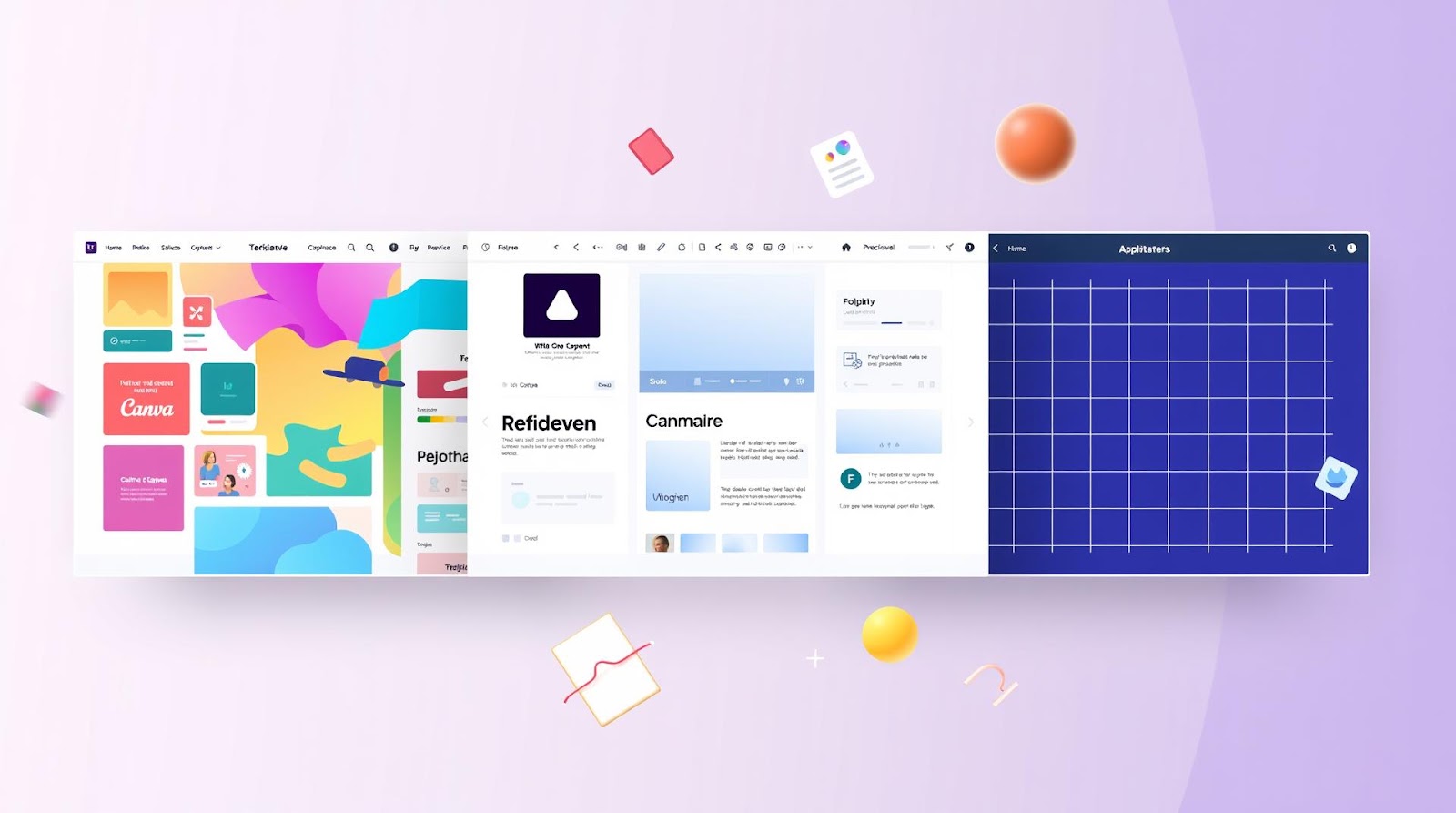
I spent three months thinking Canva was the obvious choice for everyone. I was wrong. Here's what actually happened when I stopped recommending it blindly and actually used all three tools for real projects.
This isn't a "complete comparison" where I'll pretend all three tools are equally great with different strengths. They're not. One is genuinely overrated. One surprised me. And one has a serious catch that nobody talks about.
Let me walk you through what I learned the hard way — so you don't waste time like I did.
Canva: The Tool Everyone Knows But Maybe Shouldn't Start With
Canva's the household name now. Templates everywhere. Drag-and-drop simplicity. Your mom probably uses it. That's both its strength and, honestly, its biggest problem. Here's what surprised me: Canva is *good*, but it's optimized for a very specific person. If you need to make a social media post, a flyer, or a birthday card invitation in 10 minutes, it's fantastic. The template library is genuinely massive. I counted over 2,000 templates for Instagram Stories alone. And they're actually decent — not all garbage like some template libraries.Where Canva Actually Shines
The speed is real. I timed myself making a LinkedIn carousel post. 8 minutes from zero to shareable. The brand kit feature (which lets you save your colors, fonts, and logos) is underrated — it makes repeat designs actually consistent, which matters more than people think. But here's the thing: Canva is a *template remixer*. You're choosing designs others have made, then swapping in your content. If that's what you need, great. If you want to actually *design* something original? Different story.The Real Cost (It's Not What You Think)
The free version has serious limitations that aren't immediately obvious. You get a decent template library, but the best features live behind a paywall. The real kicker? Canva Pro ($119/year or $13/month) isn't optional if you want to do anything beyond basic stuff. I used to think this was fair. Now I'm not sure. Because once you pay for Canva, you're locked into their ecosystem. You can't take your designs elsewhere easily. The files don't export as editable projects — they're locked to Canva. That matters if you want flexibility.
Pro Tip: If you do pay for Canva, use the "Magic Write" AI feature for copy. It's genuinely useful for generating social media captions, and it saves more time than the templates themselves.
Adobe Express: The Underdog That Actually Competes
I expected Express to be a watered-down version of full Adobe Creative Suite. It's not. Adobe Express is free (truly free — no weird catches). It feels like someone at Adobe actually sat down and thought, "What do people actually need?" instead of just stripping features from Photoshop. The interface is cleaner than Canva's, honestly. Less cluttered. The templates are good but fewer than Canva — maybe 500 solid ones instead of 2,000 mediocre ones. That's actually better for decision-making. You're not scrolling for 20 minutes.Why It Surprised Me
The design quality is noticeably better. Adobe's in-house designs look more professional than Canva's crowdsourced ones. I made the same project in both tools. The Adobe version looked like someone who knew design made it. The Canva version looked like a template. Generative fill (their AI image tool) is actually useful. Not perfect, but useful. I needed to remove someone from a photo background for a portfolio project. Took two clicks. Canva would charge me for that feature or not offer it at all. The fonts are better. Adobe has real typography choices, not just "big sans-serif and script font." This matters if you care about how your design actually looks.The Catch (There Always Is One)
Express is genuinely free, but cloud storage is limited (5GB). If you're a heavy user, you'll hit that limit. Canva's free tier also has storage limits, so it's not unique — but worth knowing. The template library is genuinely smaller. If you need niche stuff (like "podcast cover with a specific vibe"), Canva wins. For standard social media, business cards, or presentations, Express is fine. And here's the thing I didn't expect: Adobe pushes you toward their Creative Cloud subscription. Not aggressively, but it's there. The free version is actually good, which makes me respect them more. They're not crippling it just to force upgrades.Figma: The Tool Nobody Mentions But Everyone Should Know About
This is where I was wrong about the whole comparison. Figma isn't really a competitor to Canva or Express. I kept treating it like one, and that was stupid. It's a different animal entirely. But — and this matters — it's actually free for what most people need. Figma is for people who want to *design*, not just fill in templates. You're building from scratch. It has a learning curve. Real tools do.What Figma Actually Is
It's a browser-based design tool that professionals use. UI designers. Graphic designers. Product teams. But the free version is genuinely powerful. You get everything except some advanced collaboration features and cloud storage (20MB instead of unlimited). I made a complete logo system in Figma free. Not a template. Not a remix. An actual design. Then I exported it as a file I own, that works in any program. Try that with Canva. The learning curve is real, though. Expect to spend 2-3 hours with tutorials before you're comfortable. Canva? 10 minutes and you're done. That's not a weakness of Figma — it's just different.Who Figma Is Actually For
If you're a student learning design, it's incredible. Free, industry-standard, and you build a portfolio with real design work. Companies know Figma. They don't know Canva. If you're a freelancer or small business owner who wants *control* over your design, Figma free is worth the learning time. Once you know it, you're faster than any template tool. If you just need a birthday party flyer? Use Canva. Don't torture yourself with Figma.| Feature | Canva | Adobe Express | Figma |
|---|---|---|---|
| Learning Curve | Instant | Quick | Steep |
| Free Version Quality | Good (limited) | Excellent | Excellent |
| Template Library | Massive | Solid | Minimal |
| Design Customization | Limited | Good | Unlimited |
| Best For | Quick social posts | Professional designs | Learning design |
| Free File Ownership | Limited export | Full export | Full ownership |
My Take
I used to recommend Canva to everyone. Now I don't. It's a great tool, but it's overrated as the "default choice" for all design work. The hype machine made me lazy about actually evaluating the alternatives. Adobe Express genuinely surprised me. The design quality is noticeably better than Canva's, it's truly free without weird catches, and Adobe's approach of "make a great free product" instead of "cripple the free version" feels rare now. If I had to pick one tool for most people, it's Express. Figma shocked me because I almost dismissed it. I thought it was "too professional, too complicated." But that's the point. It IS complicated because it's powerful. And for students, freelancers, or anyone who wants to actually learn design? It's invaluable. The learning time pays off fast. What actually frustrated me: the marketing. Canva's everywhere because they spend money on it. Express and Figma are objectively strong tools that deserve more attention. Using Canva because it's the only name you know is like using Chrome because it's the only browser you've heard of. The real insight? Stop picking design tools based on brand recognition. Match the tool to what you actually need to make. Quick templated design? Express now. Learning to design? Figma. Need it in 5 minutes? Canva still works.Verdict
If you're making social media content and want templates: **Adobe Express**. Better designs than Canva, truly free, and you own your files. If you're learning design or building a professional portfolio: **Figma**. The learning curve is real, but companies recognize it, and you build actual design skills instead of template-swapping skills. If you need something *right now* and don't care about quality: Canva still works. But you'll probably pay for Pro, and then you're locked into their ecosystem. My honest take? Start with Adobe Express. If it doesn't give you enough control, graduate to Figma. Skip Canva's paid tier — the free version is okay, but not worth the money when Express exists.Published by Dattatray Dagale • 10 July 2026






0 Comments