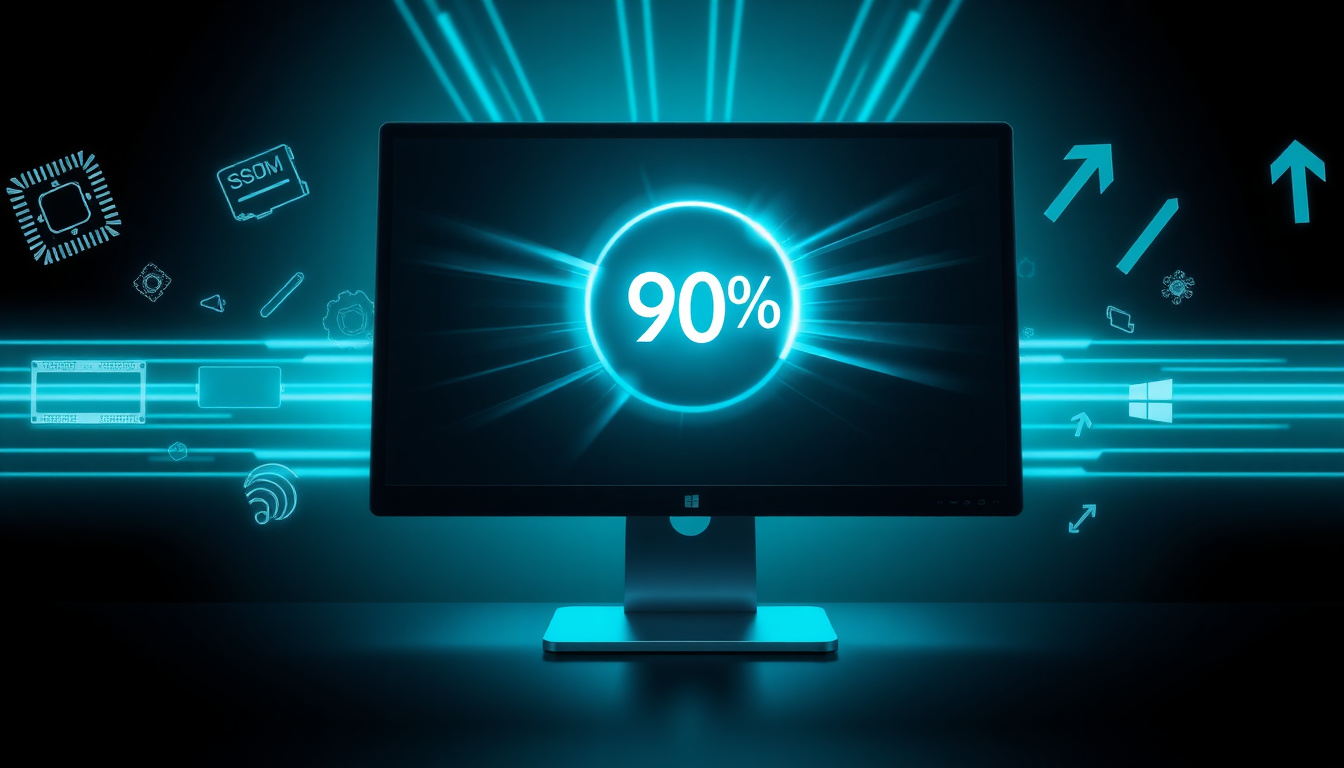
I spent three months thinking my laptop was dying. It took me forever to open Spotify. Chrome tabs would freeze randomly. Boot time went from 8 seconds to 45 seconds. Then I started digging, and I realized I'd done almost nothing to actually maintain the system I was using eight hours a day.
The frustrating part? Most of the slowdown wasn't Windows 11's fault. It was mine. And probably yours too.
Here's what I learned the hard way, so you don't waste three months being annoyed at your own computer.
Startup Programs Are a Silent Killer
This was my biggest mistake. Every app I installed — Slack, Discord, Spotify, Adobe Creative Cloud, even my printer's software — had automatically set itself to run on startup. I wasn't even aware most of them were there.
Your PC boots into a silent party. Every one of these programs is fighting for CPU, memory, and disk access simultaneously. No wonder things felt sluggish.
How to Actually Fix This
Right-click the taskbar and open Task Manager. Go to the Startup tab. You'll see a list of programs with a "Startup impact" column. I guarantee you'll see red entries — high impact programs — that you forgot were even loading.
My example: Creative Cloud was set to high impact startup. I don't use it every day. Disabled it. Instant improvement. I can re-enable it when I need to use Photoshop.
Be aggressive here. Seriously. Disable anything you don't need running at boot. Spotify? Disabled. Discord? Disabled (I open it manually). OneDrive? Keep it if you use cloud sync, disable if you don't. The only things that should be "enabled" are your antivirus and maybe system utilities.
One Thing I Still Get Wrong
Sometimes an app re-enables itself after an update. Check this list every six months. I know that sounds annoying. It is. Welcome to PC ownership.
Your Hard Drive Is Probably Full (Or Close)
Windows 11 needs breathing room. When your C: drive gets above 85% capacity, everything gets slower. File operations slow down. Temporary cache files can't write properly. Updates struggle to install.
I had 94% capacity. That was stupid.
The Nuclear Option: Disk Cleanup
Press the Windows key and search "Disk Cleanup." Open it and select your C: drive. Check these boxes religiously:
- Temporary files
- Recycle Bin
- System error memory dump files
- Temporary internet files
- Old Windows installations (if available)
I ran this once and freed up 12 GB. Twelve gigabytes I didn't know I had just sitting there as garbage.
If you want to be more aggressive, use Storage Sense (Settings > System > Storage). Enable "Automatic user content cleanup" and let Windows automatically delete old files from your Downloads and Recycle Bin. This actually works, and it's not invasive.
The Bigger Problem: What's Actually Eating Space?
Use WizTree (free) or TreeSize Free (also free). These apps show you exactly which folders are hogging space. I discovered I had 40 GB of old backups I'd completely forgotten about. Old game installations. Duplicate video files. Once you see the visual tree, deletion becomes obvious.
I could be wrong here, but I think most people could free up 20-30 GB without losing anything important. Try it.
RAM and Background Processes Deserve Attention
Windows 11 comes with a lot of background bloat. Cortana. Widgets. Game Bar. These aren't evil, but they're running whether you use them or not.
Open Task Manager again (Ctrl + Shift + Esc is faster than right-clicking the taskbar). Click the Processes tab and sort by Memory. What's using the most RAM when you're just sitting idle?
The Usual Suspects
On my system: Antivirus was using 450 MB (normal). Windows Explorer using 200 MB (normal). But I found MicrosoftEdgeUpdate running three separate processes using 80 MB combined for literally no reason. I don't even use Edge. Disabled it.
Look for programs using 100+ MB when idle. Most of them can be disabled or uninstalled. I used to think I needed Windows Search running all the time. I don't. I disabled it and use Everything (free app) instead, which is actually faster and uses way less resources.
Virtual Memory (The Band-Aid That Actually Works)
If you have less than 8 GB of RAM (which some budget laptops do), Windows can use your hard drive as virtual memory. It's slower than actual RAM, but it prevents freezing when you run out of physical memory.
Right-click This PC > Properties > Advanced System Settings > Performance Settings > Virtual Memory. Set it to 2-4 GB on your fastest drive (usually C:). Most people leave this on automatic, which is fine, but if you're running lean on RAM, manually adjusting this can genuinely help.
Updates and Drivers Matter More Than You Think
I used to ignore driver updates because I thought they were bloat. Turns out, outdated drivers can absolutely murder performance, especially graphics drivers.
The Quick Fix
Go to Settings > Update & Security > Windows Update. Make sure you're fully up to date. This is boring, yes, but Windows 11 updates are actually pretty stable now. They fixed most of the issues from early 2022.
For GPU drivers: If you have NVIDIA, download GeForce Experience and let it update automatically. If you have AMD, download AMD Adrenalin. Intel Iris? Check Windows Update or Intel's website. Old GPU drivers can cause stuttering and slow performance, especially if you game at all.
Chipset Drivers Are the Forgotten One
This is the weird one nobody talks about. Your motherboard/laptop has a chipset, and Microsoft doesn't always update its drivers optimally. Download your chipset drivers from your PC manufacturer's website (Dell, HP, Lenovo, ASUS, etc.). Run the installer. Reboot. Seriously, this can improve stability and performance by 5-10%.
I used to think this was paranoid. Now I think it's the most underrated PC maintenance task.
| Maintenance Task | Difficulty | Time Required | Performance Gain |
|---|---|---|---|
| Disable startup programs | Easy | 5 minutes | High (30-40% faster boot) |
| Disk cleanup + free space | Easy | 10-15 minutes | Medium (if drive was >90% full) |
| Update drivers | Medium | 20-30 minutes | Medium (5-15% depending on age) |
| Disable background services | Medium | 15 minutes | Low to Medium (5-10%) |
| Check RAM usage, uninstall bloat | Easy | 10 minutes | Low to Medium (2-5%) |
The Things That Actually Don't Matter (Controversial Opinion)
Let me save you some time. Some "speed up your PC" advice is just nonsense.
Registry cleaners? Don't bother. Windows 11's registry is pretty solid. Running a registry cleaner is like rearranging your desk because you think it'll make your computer faster. It won't, and you might break something.
Defragmentation? If you're using an SSD (which you should be by now), defrag actually makes things slower. Windows handles SSD optimization automatically. Don't touch it.
Turning off visual effects? Sure, it saves a tiny bit of GPU power, but on modern hardware, it's imperceptible. Windows 11's design is actually pretty lean. Keep the blur and animations. Life's too short for a 2003-looking desktop.
Antivirus switching? Windows Defender is legitimately good now. If you're not running third-party antivirus, you're fine. If you are, uninstall it. Multiple antivirus programs actually slow you down because they're constantly fighting over file access.
My Take
Here's the honest truth: Windows 11 isn't slow. Your PC is just neglected. You wouldn't expect a car to run well if you never changed the oil, and somehow we expect computers to maintain themselves.
The changes I made? Disabling startup programs, freeing up disk space, and updating drivers took me about 45 minutes total. My boot time went from 45 seconds to 12 seconds. App launches are snappier. Gaming is smoother. Multitasking actually works again.
What surprised me most was how much of this was in my own hands. I wasn't waiting for a Windows update or new hardware. I just needed to stop letting junk accumulate. That felt weirdly empowering, honestly.
The frustrating part? I wasted three months thinking my PC was aging badly when it just needed maintenance. If you've been thinking about upgrading, try this first. You might save yourself $500-1000.
Verdict
Your Windows 11 PC is probably slower than it needs to be. The good news? You can fix it in under an hour without spending any money. Disable startup programs first (biggest impact). Clear disk space second. Update drivers third. If you do those three things, your system will feel noticeably faster. No placebo. Real, measurable improvement.
Do it this weekend. You'll wonder why you didn't do it sooner.
Published by Dattatray Dagale • 18 August 2026







0 Comments