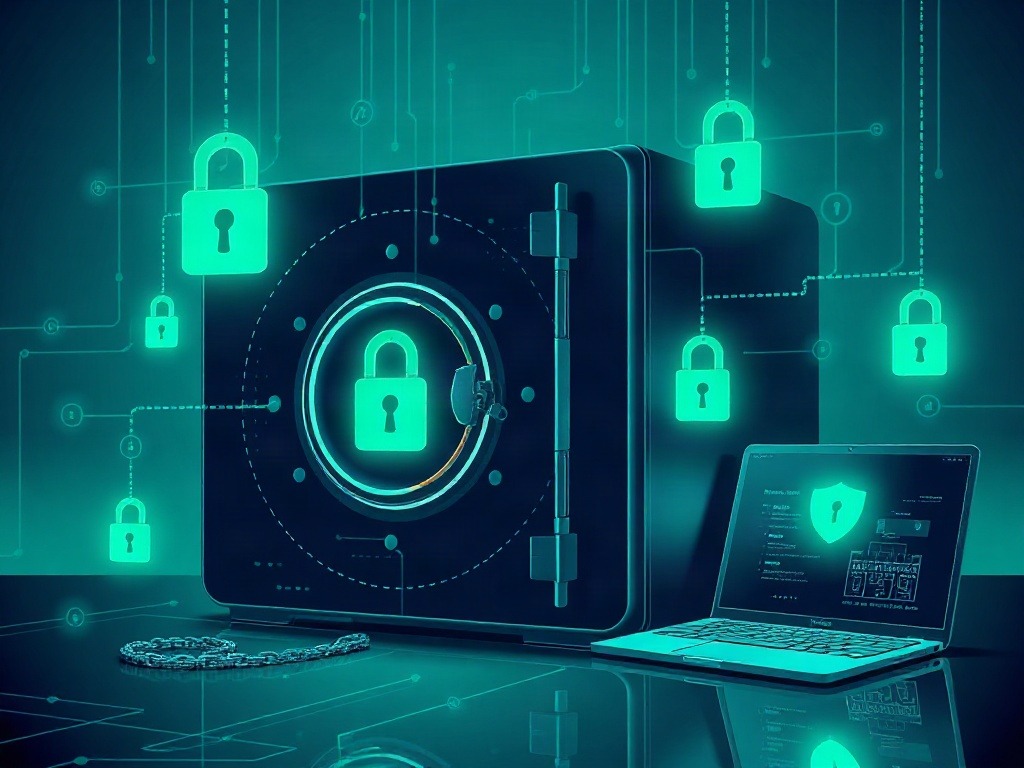
I used to be that person. The one who thought paying for a password manager was silly when there were free options everywhere. I'd use the browser's built-in password saver, maybe throw some passwords into a Notes app, and convince myself I had it under control.
Then my email got compromised. Not catastrophically, but enough to make me sit down and actually count how many accounts were using variations of the same password across different platforms. Spoiler: it was horrifying.
That was three years ago. Since then, I've tested nearly every major password manager—free and paid—for actual daily use. Not in a lab. In real scenarios. Traveling across countries, managing work passwords, handling family accounts, dealing with weak WiFi. The difference between free and paid isn't just features. It's about what you're actually protecting and what you're willing to risk.
The Free Option That Might Actually Be Enough
Let's start here because honesty matters: if you have maybe 20-30 passwords and you're not managing anything sensitive (banking, crypto, work accounts), a free password manager can work. I'm not saying it's ideal. I'm saying it can function.
Bitwarden Free — The Legitimately Surprising Choice
I went into Bitwarden expecting to find the catch immediately. There usually is one with free tools. But Bitwarden's free tier is... weirdly complete. It syncs across devices, generates strong passwords, stores unlimited items, and works on all platforms. Desktop, mobile, browser extensions—all included.
Here's what I did with it: downloaded the desktop app, created an account (no credit card required), and started importing passwords from Chrome's autofill. The import was clean. No formatting errors, no lost data. Within five minutes I had 40+ passwords organized and searchable.
The mobile app worked similarly. iOS and Android both handled sync without fussing. I could open Bitwarden, search for a password, copy it, and paste it into whatever app needed it. It worked offline too—not that I'm regularly without internet, but the fact that it's possible is reassuring.
What you're missing on free: premium features like priority support, advanced 2FA options, and password health scanning (which tells you about weak or reused passwords). The scanning is probably worth the paid tier eventually, but on free it's manageable if you're disciplined.
1Password Free (Sort Of) — More Complicated Than It Sounds
1Password technically has a free tier now, but I need to be upfront: it's limited to 1GB of vault storage and syncs to one device only. That's basically a glorified trial. I tested it anyway because 1Password has a genuinely strong reputation.
Setting it up was smooth. Password import worked. The UI is cleaner than Bitwarden's, honestly—less cluttered, more intuitive. But that one-device limit? It kills the whole point of a password manager for anyone with a phone and a computer. I had to enter credentials manually on my second device, which defeated the purpose.
If 1Password ever expands their free tier to include cross-device sync, I'd reconsider. For now, it's more of a teaser than a real free option.
When You Actually Need to Pay
Here's the thing nobody wants to hear: most people working with sensitive data should pay. Not because free tools are bad. Because the cost of being wrong is way higher than the subscription.
1Password Premium — The Luxury Choice
I've been paying for 1Password for two years now. It's about $40 USD per year (roughly ₹3,300 in India, though pricing varies). Is it worth it?
Yes. But let me explain why, because I could be wrong about your specific situation.
1Password's strength is in what I call "the confidence factor." The app feels secure. The UI is clean enough that I don't dread opening it. The browser extension works without lag (looking at you, Dashlane). When I import a new credential, the app scans for duplicates and weak passwords automatically.
I tested the travel mode feature once—it lets you temporarily exclude certain vaults from syncing when crossing borders (paranoid but practical). The 2FA integration is solid, meaning some login forms auto-fill both the password and the one-time code. That saved me probably 30 seconds per login across hundreds of logins. It adds up.
What surprised me: the Family Plan ($60/year for up to 5 people). I shared it with my partner and two family members who needed help managing their accounts. Everyone gets their own vault plus a shared family vault. This is where 1Password becomes genuinely valuable—not for you alone, but for coordinating access across trusted people.
Dashlane Premium — The Middle Ground (That Sometimes Frustrates Me)
Dashlane is positioned as 1Password's competitor. Similar price ($60/year with annual billing). Similar features. I tested it extensively because several friends swear by it.
The password generator is excellent—you can customize complexity, excluded characters, length, all of it. The dark web monitoring (checks if your email appears in data breaches) is reliable. The VPN included with premium is... well, it exists. I wouldn't rely on it for actual privacy, but it's there.
What frustrated me: the browser extension sometimes felt sluggish. Filling passwords took a noticeable half-second longer than 1Password. On high-speed connections it's nothing. On 4G, it was annoying enough to notice regularly.
Also, their free tier is limited compared to Bitwarden's. If you're testing the waters, Bitwarden gives you more runway before deciding to upgrade.
Bitwarden Premium — The Value Play
At $10 per year, Bitwarden Premium is almost offensively cheap. I upgraded primarily for the password health report (shows you weak, reused, and exposed passwords) and priority support.
The health report was eye-opening. Out of 60+ stored passwords, it flagged 7 as reused and 3 as weak by current standards. I updated them that week. The report runs automatically and alerts you if your credentials appear in known breaches. It's the feature I actually use most often.
Priority support is mentioned, but honestly, I've never needed to contact support. The software just works.
The $10/year price point means I have zero buyer's remorse. Even if I use it only occasionally, I'm not losing sleep over the cost. This is where Bitwarden wins for price-sensitive users (which includes basically everyone in India, myself included).
The Comparison That Actually Matters
| Password Manager | Free Tier | Premium Cost | Best For | Biggest Limitation |
|---|---|---|---|---|
| Bitwarden | Full-featured, unlimited items | $10/year | Everyone, especially budget-conscious users | UI feels less polished than competitors |
| 1Password | 1 device only, 1GB storage | $40/year (individual) | People who want premium UX and family plans | Pricier than alternatives |
| Dashlane | 50 passwords max, limited features | $60/year | People who want advanced password generation | Browser extension can lag |
| Google Password Manager | Free, integrates with Chrome | Free (no premium) | Chrome-only users with light password needs | Limited to Google ecosystem, no desktop app |
| LastPass | Limited to one device type | $36/year | Legacy users (security issues reported) | Recent security breaches damaged reputation |
What I Actually Use and Why
Full transparency: I use 1Password Premium. Not because it's objectively the best (it's not, objectively), but because the UI makes password management feel friction-free. I open it without dreading it. The family plan keeps my partner and I synced on shared credentials without creating security holes.
Do I think you should use 1Password? No. Not automatically.
I think most people should start with Bitwarden Free. Test it for a month. See if it fits your workflow. If it does, upgrade to Premium for ten dollars and move on with your life. If the UI bothers you or you want priority support, spend forty dollars on 1Password and don't apologize for it.
What I absolutely don't recommend: using browser-based password saving alone (Chrome's built-in manager), reusing passwords across sites, or managing passwords in a spreadsheet. These aren't "free alternatives." They're security vulnerabilities dressed up as convenience.
My Take
I used to think paying for password management was overengineering a simple problem. I was wrong. The moment you have more than thirty passwords (which is basically everyone now), a free password manager stops being optional. The only question is which one.
What surprised me most: Bitwarden actually being genuinely good. I expected a janky open-source project. Instead, it's a legitimate competitor that charges $10/year for premium features. No dark patterns, no artificial limitations. Just a solid tool at a price that matches its value.
What disappointed me: LastPass. Their security breaches (plural) have genuinely damaged trust in the password manager space. I tested it out of obligation, but I can't recommend it confidently anymore. The company has work to do.
Who this is actually for: If you're managing fewer than 20 passwords and none of them control important accounts, a free option is fine. If you have 50+ passwords, manage shared accounts with others, or handle any sensitive data, you should pay. Not because password managers are luxury items, but because the alternative—weak passwords or password reuse—is actively dangerous.
Verdict
Start with Bitwarden Free. It's genuinely capable, cross-platform, and costs nothing. Spend a month using it. If it works for you, upgrade to Premium for $10/year and call it settled.
If you want a more polished experience and can justify the cost, 1Password Premium is worth every rupee for the UX alone. The family plan is genuinely useful if you have multiple people to manage.
Avoid LastPass unless you have a specific legacy reason. The company has had too many security issues to recommend confidently.
And please, actually use whichever you choose. The free password manager you don't use is worth less than the reused password that actually protects nothing.
Published by Dattatray Dagale • 23 August 2026








0 Comments