I used to think Python was for data scientists and software engineers. File management? Email automation? Repetitive tasks eating into my day? I figured those were just problems I had to live with.
Then I actually tried it. And honestly, I was wrong.
Here's the thing about Python for automation: you don't need to be a programmer. You need maybe three hours to learn the basics, write one working script, and suddenly you're saving 30 minutes every single day. Over a year, that's 150 hours. For most of us, that's worth figuring out.
I'm going to walk through three scripts I actually use. Not theoretical examples. Real ones. What worked, what took me forever to debug, and what I'd do differently next time.
The Setup (Yes, You Actually Need This)
Before we get to the fun part, let me be clear about something: this isn't going to work if you skip the setup. I spent an embarrassing amount of time thinking my script was broken before realizing I just hadn't installed Python properly.Installing Python and a Text Editor
Go to python.org. Download the latest version. During installation, there's a checkbox that says "Add Python to PATH" — tick it. I didn't the first time. Regretted it. For writing code, I use VS Code (free, works great). Some people use PyCharm, which is heavier but more hand-holding. Sublime Text works. Literally any text editor that syntax-highlights Python will do. Open a terminal (Command Prompt on Windows, Terminal on Mac/Linux). Type `python --version`. If you see a version number, you're good. If you don't, your PATH isn't set correctly. Google the error. This part sucks but it's a one-time pain.One Library You'll Use for Everything
Most of what I'll show you uses built-in Python stuff, but you'll eventually want `requests` for downloading things and `schedule` for running tasks on a timer. Install them using pip (Python's package manager) like this: ``` pip install requests schedule ``` That's literally it. You'll use these two more than anything else.Script 1: The Folder Organizer (Actually Useful)
My Downloads folder was chaos. 847 files. I named them things like "document.pdf" and "report (1) (final) (ACTUAL FINAL).docx". I needed a script that would move files into subfolders based on their type. PDF files into a "PDFs" folder, images into "Images", that sort of thing. Here's what I wrote: ```python import os import shutil from pathlib import Path # Define where your files are downloads_folder = "/Users/yourname/Downloads" # Define file types and where they should go file_types = { "PDFs": [".pdf"], "Images": [".jpg", ".png", ".gif", ".jpeg"], "Documents": [".docx", ".doc", ".xlsx", ".xls", ".pptx"], "Videos": [".mp4", ".mov", ".avi"], "Archives": [".zip", ".rar", ".7z"] } # Loop through each file in Downloads for filename in os.listdir(downloads_folder): file_path = os.path.join(downloads_folder, filename) # Skip if it's a folder if os.path.isdir(file_path): continue # Get the file extension file_extension = Path(filename).suffix.lower() # Find which folder this file should go to for folder_name, extensions in file_types.items(): if file_extension in extensions: # Create the folder if it doesn't exist destination_folder = os.path.join(downloads_folder, folder_name) if not os.path.exists(destination_folder): os.makedirs(destination_folder) # Move the file shutil.move(file_path, os.path.join(destination_folder, filename)) print(f"Moved {filename} to {folder_name}") break ``` What actually happened: I ran this, and 847 files got sorted into neat folders in about 2 seconds. I could have spent two hours doing this manually. Instead, I watched it happen while drinking coffee.What Tripped Me Up
The path. On Windows it's `C:\Users\yourname\Downloads`. On Mac it's `/Users/yourname/Downloads`. On Linux, it's `/home/yourname/Downloads`. Get this wrong and Python will throw an error. Also, I initially didn't handle files with no extension (like "README"). The script would skip them. I added a condition to move those to an "Other" folder. Small fix, but it matters. The big surprise? This script doesn't delete anything. It just moves files. I was paranoid about automation eating my files (reasonable, honestly), so I built in that safety.
Pro Tip: Test this script on a folder with 10 files first, not your entire Downloads folder. Make sure it does what you think before running it on thousands of files.
Script 2: The Automatic Backup (For When You Panic at 3 AM)
I have important files scattered everywhere. Desktop, Documents, a random folder called "IMPORTANT STUFF PLZ DONT DELETE". I wrote a script that backs them all up to a folder every night. If my laptop dies, I don't lose everything. ```python import shutil import os from datetime import datetime # Folders you want to backup folders_to_backup = [ "/Users/yourname/Documents", "/Users/yourname/Desktop", "/Users/yourname/Projects" ] # Where backups go backup_destination = "/Users/yourname/Backups" # Create a timestamped folder timestamp = datetime.now().strftime("%Y-%m-%d_%H-%M-%S") backup_folder = os.path.join(backup_destination, f"backup_{timestamp}") # Create the backup folder os.makedirs(backup_folder, exist_ok=True) # Copy each folder for folder in folders_to_backup: if os.path.exists(folder): folder_name = os.path.basename(folder) destination = os.path.join(backup_folder, folder_name) shutil.copytree(folder, destination) print(f"Backed up {folder_name}") else: print(f"Folder not found: {folder}") print(f"Backup complete: {backup_folder}") ``` Run this once, and you've got a complete copy of your important folders. Run it weekly and you've got multiple snapshots.Making It Actually Run on a Schedule
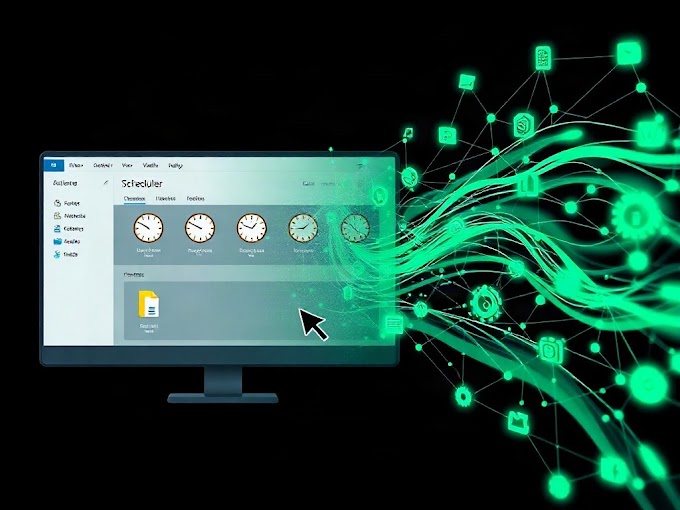
A script that runs once is fine. A script that runs every Sunday at 9 PM without you thinking about it? That's automation. On Mac or Linux, use `cron`. On Windows, use Task Scheduler. Both are free and built-in. (I used Windows Task Scheduler and it took me 20 minutes to figure out, but only because I refused to read the documentation.) For Mac/Linux: ``` crontab -e ``` Add this line (adjusts the path to where your script lives): ``` 0 21 * * 0 /usr/bin/python3 /path/to/your/backup_script.py ``` This runs the script at 9 PM every Sunday.The Honest Truth About This Script
It's not a replacement for cloud backup (Google Drive, Dropbox, whatever). It's a replacement for doing nothing and hoping your laptop doesn't die. I use both now. Also, it copies everything, including large video files. First backup took 30 minutes. I now exclude videos and just back those up manually once a month.Script 3: The Batch Email Sender (Probably Don't Use This on Your Boss)
I teach a small online course. Every week I send 15 people personalized emails saying things like "Hi Arjun, here's this week's lesson" or "Hi Maria, I noticed you haven't submitted assignment 3." I used to write these individually. It took forever. And they all sounded the same anyway. So I made a spreadsheet with names and email addresses, and a script that fills in the blanks: ```python import smtplib from email.mime.text import MIMEText from email.mime.multipart import MIMEMultipart import csv # Your Gmail credentials sender_email = "your-email@gmail.com" sender_password = "your-app-password" # Use App Password, not your Gmail password # Read the CSV file with names and emails recipients = [] with open("students.csv", "r") as file: reader = csv.DictReader(file) for row in reader: recipients.append({"name": row["name"], "email": row["email"]}) # Connect to Gmail server = smtplib.SMTP("smtp.gmail.com", 587) server.starttls() server.login(sender_email, sender_password) # Send personalized emails for recipient in recipients: name = recipient["name"] email = recipient["email"] # Personalize the email subject = f"Weekly Update for {name}" body = f"""Hi {name}, Here's this week's lesson. Remember to submit your assignment by Friday. Best regards, Me""" # Create the email msg = MIMEMultipart() msg["From"] = sender_email msg["To"] = email msg["Subject"] = subject msg.attach(MIMEText(body, "plain")) # Send it server.send_message(msg) print(f"Email sent to {name}") server.quit() print("All emails sent!") ``` This is where I'll be honest: setting up Gmail to work with Python took me longer than writing the script. You need an "App Password" (not your regular Gmail password). Google has a guide. Follow it exactly.| Script | Time Saved Per Use | Setup Difficulty | Still Using It? |
|---|---|---|---|
| Folder Organizer | 2 hours (manual sorting) | Easy (just paths) | Yes, weekly |
| Automatic Backup | 30 mins (peace of mind) | Medium (needs scheduler) | Yes, automated |
| Batch Email | 45 mins per week | Hard (Gmail setup) | Yes, but carefully |
What I Wish Someone Had Told Me
Error messages are your friend. When Python yells at you, it's usually telling you exactly what's wrong. I used to stare at error messages and feel dumb. Then I realized they're just saying things like "Line 15: You're trying to open a file that doesn't exist." Read them. Google them. Don't just panic. Also, start small. Don't try to automate your entire life in one script. Pick one annoying task. Write something that handles it. Get it working. Then move to the next thing. I tried to make a "super script" that did everything and it was a nightmare.
Pro Tip: Keep a "test file" folder. Before running any script on real data, test it on copies first. Sounds paranoid. It's not. It's the difference between "oops" and "oh god I deleted everything."
## My Take
I genuinely did not expect Python to be this approachable. I thought I'd need a computer science degree. Turns out, I just needed three hours, some coffee, and the willingness to look things up on Stack Overflow.
The folder organizer script alone has saved me probably 50 hours this year. That's not nothing. The backup script gives me peace of mind that's worth more than the 30 minutes it takes to set up.
What surprised me most? How many repetitive tasks I just accepted as part of life. Organizing files. Copying folders. Sending similar emails. These aren't interesting problems. Python handles them in seconds. Why was I doing them manually?
The email script is the trickiest one here, and I'll admit I use it cautiously. I test every email before sending 15 of them out. Automation is powerful, and powerful things can go wrong spectacularly.
But here's what's real: I have genuinely freed up hours of my week by automating things that were boring and mindless. That time now goes to things I actually care about. For a beginner, Python delivers on that promise immediately.
Verdict
If you have repetitive tasks eating your time, learn Python. Not because it's fashionable or because someone on the internet said so. But because you can probably write a script that saves you real hours within a week of learning it. Start with the folder organizer. It's simple, instantly useful, and gives you confidence. Then branch out. Is it for everyone? No. If your job is creative and non-repetitive, you won't get much out of it. But if you find yourself doing the same task more than twice a week, Python can probably help. The learning curve is real but it's not steep. Give it three hours. Write one script. If it works, you're sold. If it doesn't, you've lost an afternoon. Honestly, worth the bet.Published by Dattatray Dagale • 22 September 2026






0 Comments