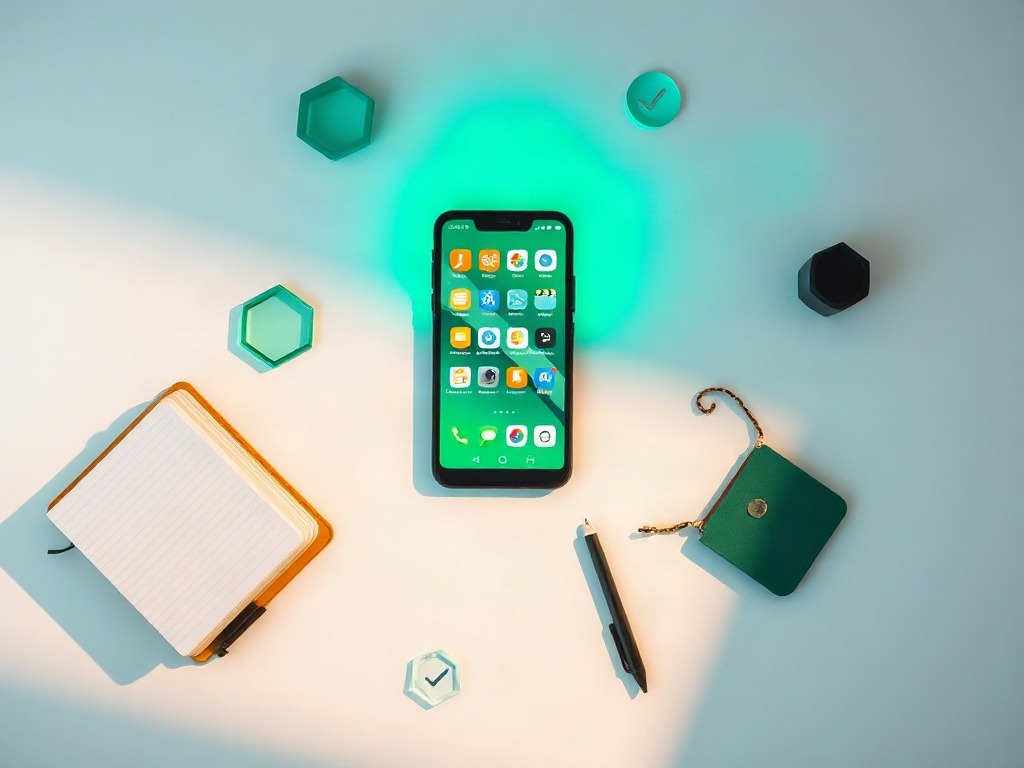
I've been testing productivity apps on Android for about three years now. Not just downloading them and checking features once — I mean using them daily, deleting them after a month when they disappoint, and coming back to them when I was wrong. The honest answer? Some absolutely can. Others... well, they'll frustrate you within a week.
The problem with most "best apps" lists is they treat all apps the same. They don't tell you which ones have annoying paywalls after two weeks, which ones actually work offline, or which ones will drain your battery by noon. I'm going to walk you through the apps I actually use, the exact problems I've solved with them, and where I think you should spend money versus where free really works.
Note-Taking That Actually Keeps Up With You
Let me start here because this is where most students waste time. They download Notion, get overwhelmed by options, then switch to OneNote, then try Apple Notes (which doesn't sync on Android properly), then give up and use Google Keep like everyone else.
Google Keep vs. Notion: Which One Should You Actually Use?
I use Google Keep for quick captures. That's it. Voice notes during lectures, sudden ideas, shopping lists — things I need to dump fast without thinking about structure. The workflow is simple: open app, tap the microphone or start typing, it syncs immediately across devices. No folders, no databases, no five-minute setup.
Here's my exact morning routine with Keep: I wake up, check yesterday's notes (which are just sitting there, color-coded by project), and I can search across everything instantly. One thing nobody mentions? The search is actually fast. I've got 200+ notes and I can find something from eight months ago in under a second by typing two words.
But Keep falls apart if you need structure. Databases, linked notes, templates — that's where Notion comes in. I used to hate Notion on Android. Slow, clunky, and I'd lose connection halfway through editing. I could be wrong here, but after their app redesign last year, it's actually usable now on mobile. Not great. Usable.
The friction point: Notion wants you to spend 20 minutes building the perfect database before you write anything. Students don't have 20 minutes. You need something that works while you're tired at 11 PM writing an essay.
My honest take? Use Google Keep for capture and daily notes. Use Notion if your course requires a semester-long project with multiple linked documents. Don't use Notion if you just need to write.
Obsidian and the "Local First" Philosophy
This is going to sound niche, but stick with me. Obsidian stores everything locally on your phone as plain text files. No cloud dependency. No "your notes are trapped in our ecosystem" situation. This matters more than you'd think if you're using spotty college WiFi or traveling.
Setup takes maybe five minutes. Download Obsidian, create a vault (that's their word for a folder), and start writing. Then you can turn on Obsidian Sync (paid, about ₹900/year) to sync across devices, or use free options like Dropbox or iCloud sync.
Why this instead of Keep? Linking. Once I write a note, I can link it to other notes with double brackets like [[this]]. Create a visual map of how your ideas connect. For research papers or complex projects, this changes everything. For quick notes? Overkill.
Task Management That Won't Make You Dread Opening the App
This is where I've wasted the most money. I've paid for Todoist Pro (₹2,400/year), bought TickTick, bounced between Microsoft To Do, and eventually landed on something I didn't expect to work.
Microsoft To Do: Why the Obvious Choice Actually Works
It's free. It syncs across devices instantly. It integrates with Outlook if you use that for email (which most professionals do). But here's the thing most reviews miss — it's not feature-rich. No priorities, no time tracking, no integrations with Slack.
But that's also why I use it. I don't need seventeen ways to categorize my tasks. I need to write down what I'm doing today, check it off, and move on. The interface is clean. Opening it doesn't trigger decision paralysis.
My workflow: Every morning, I look at my calendar and create three main tasks. Not ten tasks spread across priority levels. Three. Then throughout the day, I add smaller tasks and immediately delete them when done. The satisfaction of watching a task disappear is the only gamification that actually works on me.
Todoist if You Need Serious Structure
I'll be honest — Todoist Pro is expensive. ₹2,400 per year is about as much as a good pair of headphones. But if you're managing multiple projects, have recurring tasks, or work in teams, it's worth considering.
The game-changer? Natural language input. Type "submit assignment tomorrow at 3 PM in math project" and it parses everything. Date, time, project — all recognized. Microsoft To Do makes you click seven fields. Todoist understands what you meant.
The free version is functional but limited. You get basic task creation and that's about it. No recurring tasks, no filters, no subtasks. That's deliberately weak. They want you to pay.
Document and File Management Without Losing Your Mind
You have PDFs everywhere. Lecture slides, textbooks, research papers, assignment rubrics. Android makes it surprisingly hard to just... organize files and actually find them later.
Google Drive vs. OneDrive vs. Dropbox
I use Google Drive because I'm already in Google's ecosystem for Gmail, Calendar, and Docs. Everything syncs automatically. I can open a PDF I downloaded last week and it's right there.
Setup is automatic if you're using an Android phone with a Google account (which you are). Google gives you 15GB free, which honestly covers most students' needs unless you're hoarding 4K video files.
The friction: Google Drive's mobile app is... fine. It works. But finding files isn't intuitive. I've started using a simple naming system — [Course_Code] - [Document_Type] - [Date]. So [MATH201_Assignment_2_March2025.pdf]. Takes three extra seconds to name but saves me minutes searching later.
OneDrive is better if you're on Windows and use Microsoft Office. Dropbox is better if you're a designer. For a student? Google Drive. Stop overthinking it.
Organizing PDFs With Adobe Acrobat Reader
The free Adobe Acrobat Reader app is criminally underrated. You can annotate PDFs, highlight text, add comments, and save them right back to Drive. This is where I take notes on research papers instead of creating separate note files.
Workflow: Open a PDF in Acrobat, use the highlight tool to mark key points, add sticky notes with my thoughts, save. Everything stays in one place. The free version has everything you need. The paid version adds signature tools and cloud storage — skip that.
Study Tools That Actually Help You Remember Things
The apps you use to study matter more than the apps you use to organize. A beautiful notes app won't help if you're not reviewing the material.
Anki: Spaced Repetition for People Who Actually Want to Learn
Anki is free, open-source, and confusing at first. But it's based on spaced repetition — a scientifically proven study method. You create flashcards, and Anki shows you cards you're struggling with more often and cards you know well less often.
First time I opened Anki, I was lost. The interface is from 2005. The deck structure feels overly complex. But once I made my first deck — about 50 cards for an anatomy exam — I realized why students have been using this for fifteen years.
The exact process: Download Anki (desktop), create cards, sync to AnkiDroid (free Android app), study on your phone. Each card has a front (question) and back (answer). I review 20-30 cards during my commute every morning. Takes about ten minutes. Over a semester, this actually works.
Why not Quizlet? It's prettier, free, and has a social component. But Quizlet's spaced repetition algorithm is weak compared to Anki. Quizlet is better for casual studying. Anki is better if you have actual exams you need to ace.
Google Scholar and ResearchGate for Finding Papers
Both apps are free. Google Scholar searches millions of academic papers. ResearchGate is a social network for researchers where scientists actually upload their work and answer questions.
My process when I need a research paper: Search Google Scholar first. If I can't access it, I check ResearchGate and message the author directly. Scientists actually respond. I've had three people send me their papers within hours. It's wild.
| App | Best For | Cost | Learning Curve |
|---|---|---|---|
| Google Keep | Quick notes, capture ideas | Free | Instant |
| Notion | Complex projects, databases | Free (basic) / ₹800+ (premium) | Steep |
| Obsidian | Long-term knowledge system | Free (or ₹900/year for sync) | Medium |
| Microsoft To Do | Daily task management | Free | Instant |
| Todoist | Complex workflows, teams | Free / ₹2,400/year | Medium |
| Anki | Memorization, spaced repetition | Free | Steep (initially) |
Communication and Collaboration Apps That Don't Suck
Group projects are inevitable. These apps either make them painless or absolutely miserable. There's no middle ground.
Google Meet and Telegram for Staying Connected
Google Meet is free, built into Gmail, and works everywhere. No account creation needed if someone sends you a link. I've used it for 50+ video calls and never once had it crash. It handles poor internet better than Zoom does.
For group chats, I use Telegram instead of WhatsApp because you can create larger groups, the interface is cleaner, and it actually works reliably. I know everyone's on WhatsApp, but Telegram handles large project groups better without slowing down.
Google Docs for Collaborative Writing
This is non-negotiable for group assignments. Multiple people can edit simultaneously. Everyone sees changes in real-time. Comments are built-in. Version history is saved automatically.
I've watched groups use Microsoft Word with email attachments. It's a nightmare. Version 1, Version 2, Version_FINAL, Version_FINAL_ACTUALLY_FINAL. Just use Google Docs.
My Take
Here's what surprised me: the best apps are free. Google Keep, Microsoft To Do, Google Drive, Google Docs, AnkiDroid — all free. The paid apps I tested (Notion, Todoist, Obsidian Sync) add convenience, not necessity.
What disappointed me is how many students download 15 apps trying to find the "perfect" productivity tool. You don't need perfect. You need consistent. Use Google Keep for notes, To Do for tasks, Drive for files, and Anki for studying. That's a complete system that takes zero time to learn.
The only app where I think paying makes sense is Anki Sync (₹900/year) if you're a serious student preparing for competitive exams or medical school. Everything else? The free versions work fine.
One more thing: test these for one week before deciding. Not one day. One week. Your actual workflow will reveal which apps work for your brain, and no blog post can predict that.
Verdict
Start with this four-app stack: Google Keep (notes) + Microsoft To Do (tasks) + Google Drive (files) + AnkiDroid (studying). All free. All reliable. If you find yourself fighting the system after a month, then invest in Obsidian or Todoist. But I'd guess you won't need to.
The apps that worked for someone else probably won't work for you. That's not a design flaw — that's human nature. Your productivity system needs to match how your brain actually works at 2 AM before an exam, not how you imagine you'll work when you're refreshed and motivated.
Download one. Use it for a week. Then decide.
Published by Dattatray Dagale • 04 September 2026



0 Comments