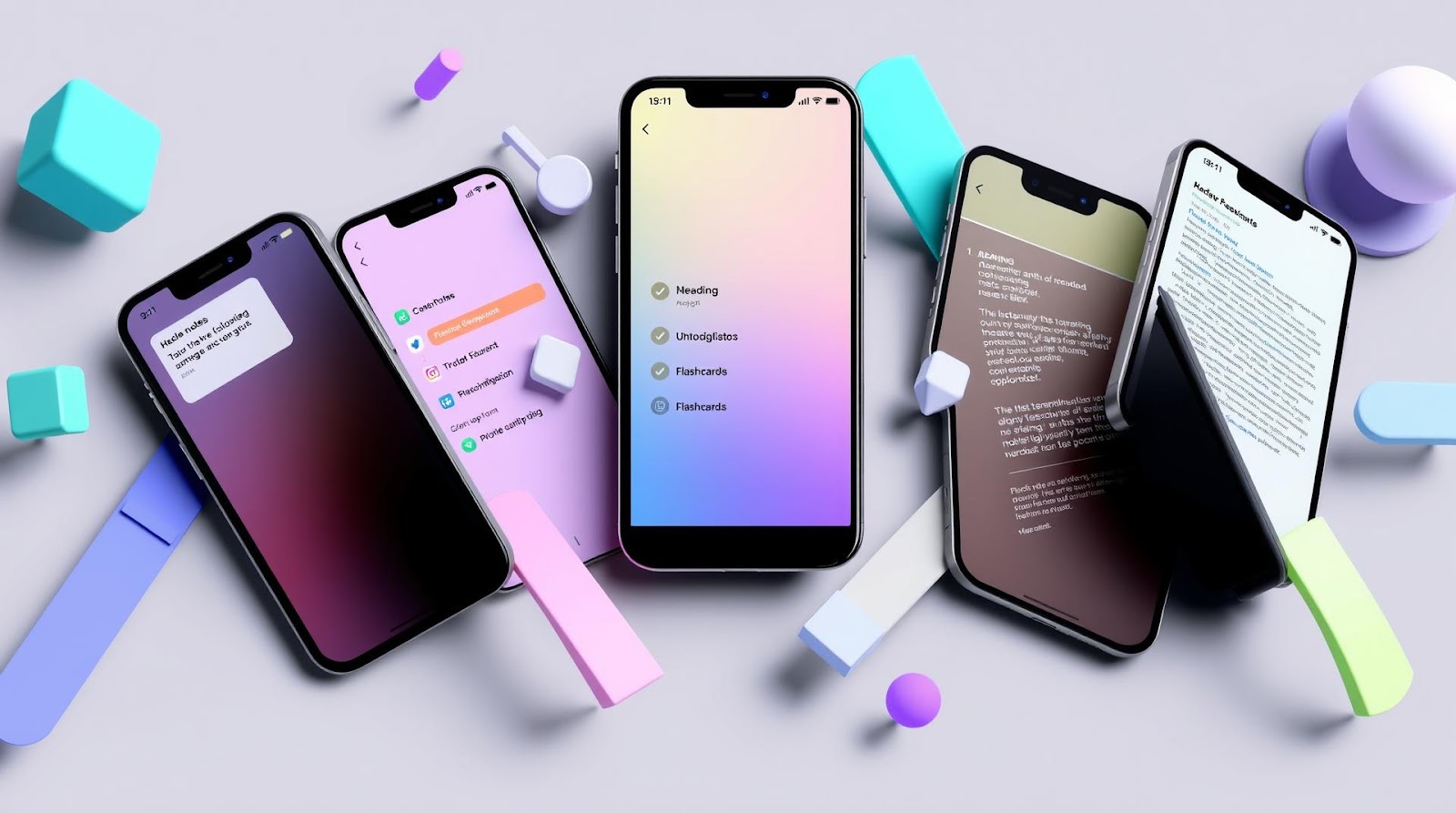
I've been that person. You know the one. The one with 47 apps installed, using maybe five of them regularly, and convinced that the next download will finally make me productive.
Spoiler alert: it won't. But there are apps that genuinely do change things — and I'm not talking about the ones that send you notifications every 3 seconds or charge ₹999/month for features you could do in Google Sheets.
After spending the last three years testing productivity apps obsessively (my friends think I'm weird), I've narrowed it down. These are the apps I actually use daily. Not the ones I installed for a weekend and forgot about. The ones that sit in my dock and would genuinely annoy me if they disappeared tomorrow.
NotebookLX and Obsidian: Why I Finally Stopped Hoarding Notes
Let me be honest: I used to be a note-taking chaos person. OneNote, Apple Notes, Google Keep, Notion, a random Telegram chat with myself — all competing for my scattered thoughts. It was exhausting.
Then I discovered NotebookLX, and it's the closest thing to actual organized thinking I've found on Android.
Why NotebookLX Works (When Others Don't)
It's not the most beautiful app. It's honestly a bit clunky. But it does something most note apps ignore: it actually lets you structure your thoughts the way your brain works. Nested folders, tags, quick capture, and — this is the key part — it doesn't force you into a system. You create your own.
I use it for everything now. Lecture notes, project ideas, code snippets, interview prep. The fact that it syncs locally and to cloud storage (your choice, not theirs) means I'm not locked into anyone's ecosystem.
The Obsidian Gap (and Why You Might Still Want It)
Here's where I used to think: "Obsidian is the ultimate note system." I was wrong. Obsidian on Android is still not great. The mobile app exists, but it feels like an afterthought. If you're primarily on desktop, fine. But if you're taking notes on your phone 70% of the time? NotebookLX wins. Use Obsidian as your "deep work" hub on desktop, NotebookLX for everything else.
Todoist and Microsoft To Do: Pick One and Stop Switching
I know what you're thinking. "Another task manager? Didn't you just say I have too many apps?"
Yes. And this is where I'm taking a clear stance: most of you are using the wrong one, or you're using the right one wrong.
Todoist is beautiful. Genuinely. The interface is clean, the design is thoughtful, and the filters are powerful. I paid for the premium version for two years.
Then I switched to Microsoft To Do. And I'm not going back.
Why Microsoft To Do (Not Todoist)
Here's the unpopular opinion: Todoist's power features are wasted on most students and professionals. You don't need custom filters. You don't need 27 label systems. What you need is something that syncs with your Outlook calendar (if you're in the Microsoft ecosystem, which most Indian offices are), integrates with Teams, and lets you work on shared lists without paying extra.
Microsoft To Do does this. And it's free. Completely free. No ₹249/month subscription hiding behind "premium features you really need."
The interface is simpler. The habit tracking is subtle but effective. And — this matters more than people admit — when your manager asks you for updates, everything's already in Outlook.
The One Thing Todoist Does Better
Todoist's natural language parsing is genuinely magic. Type "Finish report Friday 3pm" and it understands. Microsoft To Do requires more manual setup. But honestly? Typing 5 extra seconds to avoid a subscription is a trade I'm comfortable making.
| Feature | Microsoft To Do | Todoist |
|---|---|---|
| Cost | Free | ₹249/month for Premium |
| Outlook/Teams Integration | Native + Seamless | Via Zapier (requires setup) |
| Natural Language Parsing | Basic | Advanced |
| Shared Lists | Free with Microsoft Account | Premium feature |
| Mobile Experience | Good (Android-native design) | Excellent (slightly heavier) |
Pocket: The App Everyone Forgets About (But Shouldn't)
Pocket is boring. Let's start there. It's been around forever. It doesn't have a trendy name. No one's going to brag about using it at a startup meetup.
And yet.
If you're a student or professional who reads anything — articles, research papers, long-form content — and you're not using Pocket, you're actively making your life harder.
The Simple Magic of Pocket
Here's what Pocket does: you save articles, and they get cleaned up and sent to you in a beautiful, distraction-free reading format. That's it. No algorithm. No recommendations. No ads (well, with the premium version). Just you and the content.
But the genius part? It works offline. Sync an article on Wi-Fi, then read it on a flight with zero connection. And when you're done, it syncs your highlights and saves your reading history across all devices.
For research papers or course materials, this is genuinely useful. I used to copy-paste text into Google Docs like a caveman. Now I pocket the article, read it with Pocket's highlighting system, and my notes sync everywhere.
Who This Is Actually For
If you're someone who saves 40 Chrome tabs "to read later" and never actually reads them, Pocket forces you into a better system. There's a psychological thing that happens when you deliberately save something — you're more likely to actually consume it.
If you're deep in your career and reading competitor research, industry reports, or technical docs regularly, the premium version (around ₹600/year) is worth it for the full-text search alone.
Anki for Android (AnkiDroid): The Spaced Repetition App That Actually Works
This app is specifically for students, but I'm including it because it's genuinely life-changing for exams, certifications, and professional development.
Anki is based on spaced repetition — showing you information right before you're about to forget it. It's backed by actual research. And AnkiDroid is the best mobile implementation I've found.
How This Actually Changes Learning
I've used AnkiDroid for medical entrance prep, AWS certifications, and now just to maintain general knowledge. The fact that it's open-source and free shouldn't make it this good, but it is.
You create "decks" of flashcards, and the app shows them to you in an optimized schedule. Saw a card today? Anki might show it to you in 3 days. Got it wrong? It'll show you tomorrow. This is how your brain actually retains information.
The interface is outdated. I won't pretend otherwise. But every single feature works exactly as intended.
The Deck Ecosystem
Here's something most people don't know: thousands of pre-made decks exist. Medical students? There are decks for every system. Learning languages? There are community decks for every major language combo. Taking AWS exams? Decks exist.
Download them, customize them, study. Much faster than creating your own from scratch (though creating them is also a form of learning — I could be wrong here, but I think doing both gives the best results).
Snapseed and Canva: Graphics Aren't Just for Designers Anymore
Most professionals think they can't make nice graphics. Wrong. You just haven't used the right tools.
I used to spend hours asking our design team to create social media posts. Then I realized: Snapseed + Canva = I can do 70% of what I need in 10 minutes.
Snapseed for Photo Editing
This is Google's photo editing app. Free. Ridiculously powerful. The healing tool alone (removes objects from photos) is worth learning.
For students: editing presentation photos or creating project covers. For professionals: quick social media content, client presentation visuals, LinkedIn post images. The "Selective" tool lets you adjust specific parts of an image without affecting the rest.
Canva for Actual Design
Canva has templates for literally everything. Creating a project report cover? Template. Making a conference poster? Template. Designing a LinkedIn profile banner? Template. Canva has it, and the free version is actually functional (paid version is nice but not essential).
The Android version works surprisingly well. Drag, drop, customize colors, export. Done.
My Take
Here's what surprised me: the best productivity apps aren't the most expensive or the most featured. They're the ones that stay out of your way and let you focus on actual work.
I was convinced I needed Todoist's premium features. I don't. I thought Pocket was outdated. It's not — it's reliable, which is better. I assumed AnkiDroid looked bad because it was underfunded. Actually, it looks the way it does because developers didn't waste time on unnecessary UI when the core product works perfectly.
What disappointed me? Apps that try to do everything. Notion is powerful, but the Android app is frustratingly slow. Microsoft OneNote is feature-rich but confusing. Sometimes the single-purpose app (Pocket for reading, Anki for learning, To Do for tasks) beats the all-in-one solution.
This list is for people who actually want to get things done. Not people who want to spend time managing their productivity apps. If that's you, these apps work. If you're someone who changes systems every month, maybe the problem isn't the apps.
Verdict
Install NotebookLX and Microsoft To Do tomorrow. These two alone will probably improve your productivity more than anything else you'll do this month. Add Anki if you're studying for something. Use Pocket if you read frequently. And install Snapseed because occasionally you'll need to edit a photo and it's nice to know you can do it without asking someone else.
That's it. Seven apps. Not 47. You'll actually use all of them, and your phone won't feel like an overstuffed junk drawer. Which, honestly, is a productivity win right there.
Published by Dattatray Dagale • 21 June 2026





0 Comments