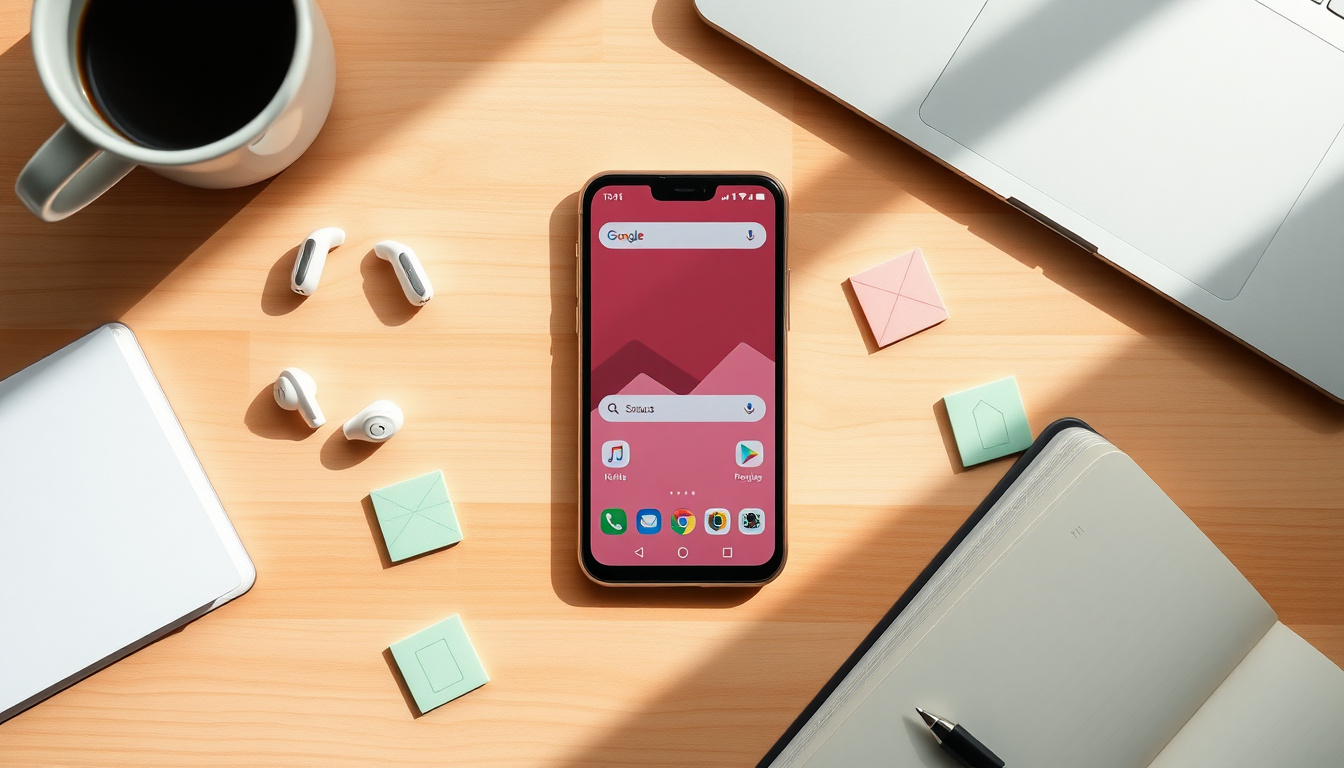
I've spent the last three months downloading, installing, and actually *using* apps that promise to make student life easier. Not the five-minute trial run—real usage. Taking notes in lectures. Managing deadlines. Actually studying for exams. And here's what surprised me: most of the popular ones don't solve what students actually struggle with. They solve what developers *think* students struggle with.
But some do get it right. And when they do, the difference is noticeable. So let's talk about the ones worth your phone storage, and more importantly, the ones that aren't.
Note-Taking Apps That Don't Make You Want to Go Back to Pen and Paper
Obsidian: For people who actually want to remember what they learned
Obsidian changed how I think about note-taking. Not because it's pretty (it's... utilitarian, honestly), but because it forces you to connect ideas instead of just dumping information into folders.
Here's the real thing: Obsidian works locally on your phone. No syncing delays, no subscription guilt, no "your plan has expired" notifications. You own your notes. This matters more than you'd think, especially in India where internet reliability varies by neighborhood.
The learning curve is real though. The backlink system—where you can connect notes to each other—feels pointless for the first week. Then suddenly you're reviewing old notes and they're actually relevant to something new you're learning, and the app has automatically surfaced them. That's when you get it.
Downside: The mobile version feels secondary. The app was built for desktop first, and it shows. If you're planning to do heavy note-taking only on your phone, look elsewhere. But if you're syncing between your laptop and phone (through iCloud or OneDrive), it's solid.
Price: Free for basic use. Premium sync costs around ₹2,000/year if you want their cloud backup, but you really don't need it.
Notion: The overcomplicated overachiever
Everyone recommends Notion. Everyone. And yes, you can build elaborate study planners, assignment trackers, and reading lists. You can make it look like a NASA command center.
But here's my honest take: Notion on mobile is slow. Not "slightly slower than the web version" slow—I mean I've tapped a button and waited four seconds for it to respond slow. On a decent WiFi connection. This makes in-class note-taking frustrating because lectures don't pause while your app loads.
That said, if you're primarily using Notion on a laptop and checking notes on your phone, it works fine. The templates are genuinely useful, and building a study dashboard for yourself does create accountability somehow.
Price: Free for personal use, which is all you need.
OneNote: The boring choice that actually works
OneNote won't win any design awards. It looks like Microsoft designed it in 2015 and forgot about it (they kind of did). But it's fast. Syncing is reliable. And it's integrated with Office, which matters if your college uses Microsoft 365.
I use OneNote for subjects with lots of diagrams and formulas because the pen input is responsive. No lag. The organization system is simple—notebooks, sections, pages—and you're not spending two hours setting up your digital workspace when you should be studying.
The real strength: collaborative notebooks. If you're working on a group project, you can share a OneNote notebook and everyone edits in real-time. No fighting over who updated what last.
Price: Free if you have a Microsoft account.
Task and Time Management Apps That Don't Become Digital Graveyards
Todoist: The one I actually check daily
I've tried every task app. Todoist is the one I've stuck with for two years, and that should tell you something.
The strength is in the friction level. Adding a task takes literally three taps. The natural language parsing—where you type "submit assignment tomorrow 5pm" and it automatically sets the date and time—sounds gimmicky but saves actual minutes daily. Over a semester, that's real time.
The recurring tasks feature is solid. Your weekly assignment submission, daily study schedule, monthly project deadlines—you set them once and they regenerate automatically. The app also shows you a "karma" streak, which is petty psychological manipulation and absolutely works on me.
Where it falls short: The free version limits you to three active filters. This shouldn't matter, but if you're managing classes, projects, and personal tasks, you'll hit that limit. The premium version is ₹1,900/year, and honestly, I think it's worth it, but I could be wrong here.
Also, Todoist sometimes shows notifications for completed tasks, which is annoying. The team seems aware but hasn't fixed it.
Google Tasks: The underrated minimalist
Google Tasks is so simple it feels like a joke. You open it, you type a task, it's done. Subtasks exist. Due dates work. It syncs across devices.
That's it. No gamification, no fancy features, no setup needed.
I recommend this to people who find Todoist overwhelming. And there are a lot of those people. If you're already using Gmail and Google Calendar, Tasks integrates seamlessly in the Gmail sidebar and Calendar view, which means your deadlines are visible where you're already looking.
The downside is obvious: it's bare-bones. No recurring tasks. No project organization beyond lists. No insights into productivity. But sometimes that's exactly what you need—a to-do list that doesn't distract you with features.
Price: Free.
Focus and Study Apps That Actually Help You Study
Forest: For people who have a phone addiction (me)
Forest's gimmick is simple: you plant a virtual tree when you start studying. If you leave the app, the tree dies. Study for 25 minutes without leaving the app, and the tree grows.
This sounds childish. I thought so too. But the brain is easily manipulated, and watching that little tree grow is weirdly motivating. Over time, you build a forest, which is basically a visual representation of your study sessions. It's satisfying in a way that a "productivity streak" number can't quite capture.
The real feature: integration with real tree planting. If you buy premium (around ₹1,200/year), some of your study session earnings go to actually planting trees. This doesn't help your focus, but knowing you're contributing to real environmental impact while procrastinating is oddly motivating.
Catch: you have to choose between studying and using other apps. So if you need to reference notes or check something on the browser, you have to pause the session. It's a feature (forces you to plan ahead) and a bug (sometimes you genuinely need to switch apps).
Focus@Will: For people who need background sound
Focus@Will curates music and ambient sounds specifically designed to boost concentration. Different channels—piano, lo-fi, electronic, focus mixes. Each designed to activate focus without distraction.
I tested this while writing and studying. Honestly? It works. Not because the music is magic, but because wearing headphones creates a psychological barrier. "I'm in focus mode now." The curated playlists are better than random YouTube lo-fi, though I could be biased.
The free version limits you to one playlist at a time. Premium (₹400/month or ₹2,400/year) unlocks all channels and offline downloads. This is where it gets tricky: you're paying for music curation. Spotify already offers focus playlists for free. The question is whether the psychology and curation is worth the cost to you.
For someone in India with limited data, the offline feature is genuinely useful. Download while on WiFi, study without draining your mobile plan.
Productivity Apps for Professional Work
Microsoft Teams: Why I stopped hating it
I used to think Teams was bloated. Then I worked in an environment where everything—messages, calls, files, meetings—happened in one place. Suddenly I wasn't juggling Slack, email, OneDrive, and calendar reminders. It's integrated, and for once that word doesn't feel like corporate nonsense.
The mobile app is actually functional. You can join meetings directly, respond to messages with priority flags, and access shared files without navigating three apps. The file search is better than Google Drive's, which surprised me.
The learning curve depends on your use case. If your organization is all-in on Microsoft 365, Teams makes sense. If it's a side tool where your team also uses Slack and email, it's another notification stream you don't need.
Price: Free personal use, or bundled with Microsoft 365 in organizations.
Slack: Still the communication standard, but it's expensive
Slack is where professional teams communicate. It's fast, searchable, and has integrations everywhere. On mobile, the experience is clean, though notifications can be overwhelming if you don't set up filters.
The problem: the free version only keeps the last 10,000 messages. For a growing team, that's literally days. So you're either upgrading to Pro (around ₹7,500/month) or losing chat history. In India, that's real money.
I use it daily in professional settings, and it's worth it there. But for student groups or casual collaboration? Probably overkill.
| App | Best For | Price | Real Drawback |
|---|---|---|---|
| Todoist | Daily task management | Free / ₹1,900/year | Free version feels limited after a month |
| Obsidian | Connected note-taking | Free / ₹2,000/year sync | Mobile experience feels secondary |
| Forest | Focus and studying | Free / ₹1,200/year premium | Requires single-app focus (can't switch) |
| Focus@Will | Concentration music | Free / ₹2,400/year | You're paying for curation; Spotify exists |
| Slack | Team communication | Free / ₹7,500+/month | Free plan's message limit is brutal |
My Take
Here's what surprised me: the best apps weren't the ones with the most features or the prettiest UI. They were the ones that solved one problem really well and stayed out of your way otherwise.
Obsidian felt clunky until I realized I wasn't using it to store notes—I was using it to build a knowledge base. Todoist felt basic until I stopped expecting it to be a productivity system and started using it as a reminder system. Google Tasks seemed useless until I realized that was the point.
The apps I abandoned were the ones that promised everything. Notion for everyone, Evernote for everything, the all-in-one solutions. They require setup time you don't have, demand constant reorganization, and make you feel guilty when you stop using them.
For students specifically: your biggest productivity issue isn't the app. It's that you have too many competing demands and not enough hours. An app can't fix that. But it can remove friction from the tasks you're already doing. Use that.
For professionals: choose tools that your team is already using. A perfect solo app is worthless if you're the only one on it.
Verdict
Students: Start with Google Tasks (free, zero friction) and OneNote or Obsidian depending on how you like to think. Add Forest if focus is your actual problem. Don't buy anything for the first month.
Professionals: Use whatever your team uses. If you're choosing, Todoist for personal tasks plus your team's communication platform (Teams, Slack, etc.) covers most needs. Spending on premium features is worth it if you actually use the tool daily.
Everyone: The best app is the one you'll actually use. That's it. Seriously.
Published by Dattatray Dagale • 10 August 2026








0 Comments