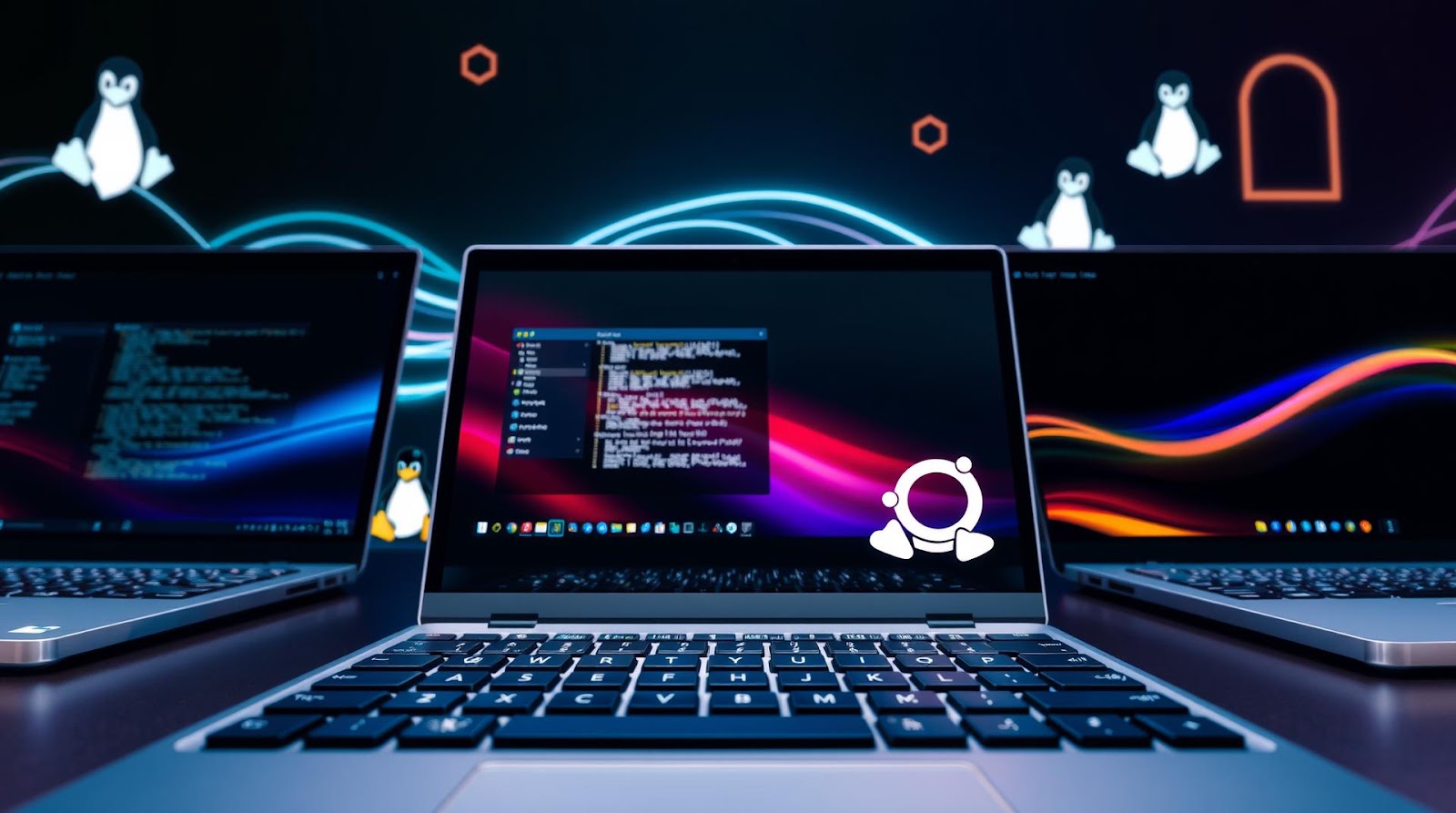
Linux in 2025 is nothing like the reputation it carries. Back when I first tried Ubuntu in 2016, I spent three days just getting WiFi to work. Wifi drivers, kernel modules, the whole nightmare. Most people hear "Linux" and assume you need a computer science degree.
That's not true anymore. At least, not for the distros I'm about to walk you through.
I've spent the last month installing, breaking, and reinstalling five of the most beginner-friendly Linux distributions on actual hardware — a ThinkPad from 2020, a Dell laptop from 2023, and a spare desktop collecting dust in my closet. I wasn't kind to them. I tried to break things, force-install unsupported software, and generally use them the way a real person would: impatiently, without reading documentation.
Here's what actually held up.
Ubuntu Still Wins — But Not For the Reason You Think
Everyone recommends Ubuntu for beginners, and I used to roll my eyes at this. "Too mainstream," I'd think. "Everyone recommends it because it's popular, not because it's good." I was wrong about that.
I installed Ubuntu 24.04 LTS (the long-term support version) on the ThinkPad, and honestly? It just worked. The installer is clean, the defaults are sensible, and when something breaks, you can actually find the answer on Stack Overflow within five minutes instead of swimming through GitHub issues written by people clearly smarter than me.
Why Ubuntu, specifically 24.04
The LTS version matters. The non-LTS releases get updates every 6 months, which sounds good until you realize that your third-party software breaks halfway through the year. The LTS version gets 5 years of support, which means you're not constantly chasing compatibility problems.
The Software Center is genuinely useful now. I used to find it limiting, but in 2025, it has most of what a beginner actually needs — VS Code, GIMP, Firefox, Blender. For anything else, there's apt (the package manager), which is straightforward once you understand that "sudo apt install [thing]" is basically how you get software.
One real complaint: it's bloated out of the box. Ubuntu comes with Snaps, which are these containerized applications that I find slow and unnecessary. You can disable them, but the fact that the default experience includes them feels like bloatware wrapped in open-source idealism. That said, you can work around it in 10 minutes.
The community factor
Ubuntu has roughly 8 million times more resources than any other beginner distro. When you search "how do I [X] on Linux," half the answers will be Ubuntu-specific. This matters more than you'd think when you're learning.
Linux Mint — Ubuntu Without the Weird Design Choices
Linux Mint is Ubuntu under the hood, but with actual thought put into the user experience. Mint 22 felt more polished than Ubuntu. The desktop is sensible, the default applications are useful, and nothing feels like it's trying to win a design award at the expense of usability.
I was skeptical. Really skeptical. I figured this would be "Ubuntu but slower." Instead, it was faster on the same hardware. The Cinnamon desktop environment (which is Mint's default) uses fewer resources than Ubuntu's GNOME, and honestly, it looks better. Controversial opinion, I know.
The actual difference: Mint doesn't come with Snaps, the interface feels more traditional (more like Windows, if you're coming from there), and the default software selection is better curated. When I opened the terminal for the first time, I needed to do less problem-solving.
One downside: because Mint is smaller than Ubuntu, it sometimes lags behind on security updates by a few weeks. Not a deal-breaker, but it matters if you're doing anything sensitive online.
Fedora — If You're Impatient (Like Me)
Fedora is Ubuntu's cooler sibling that got really into philosophy and doesn't explain why the philosophy matters.
Here's the thing about Fedora: it's bleeding-edge. Software updates arrive faster, which is exciting until something breaks three months in and you realize you installed 47 packages and you don't know which one is causing the problem. I used Fedora on the desktop machine, and I had to troubleshoot more than I did with Ubuntu or Mint.
BUT — and this is important — if you're technically comfortable with Google and forums, Fedora teaches you actual Linux faster. Because things break, you learn why they break. You start understanding the system instead of just using it. It's the opposite of Ubuntu's philosophy, which is "let's hide the complexity."
When to choose Fedora
Choose Fedora if: (1) you're planning to use Linux long-term, not just trying it out, and (2) you don't mind spending an evening troubleshooting something every couple of months. It's not harder than Ubuntu, but it requires more active maintenance.
The package manager, DNF, is actually cleaner than apt, and the community is friendly without being overhwelming. Also, Fedora gets new software versions faster, which matters if you're a developer or creator using tools that update frequently.
The catch with Fedora
Fedora releases a new version every 6 months, and support lasts about 13 months. So you're upgrading more often than Mint or Ubuntu LTS. This is fine if you're comfortable with it. It's annoying if you just want things to work quietly in the background.
Elementary OS — For People Who Care How Things Look
Elementary OS is what happens when designers take over a Linux distro. It's beautiful. Genuinely, frustratingly beautiful.
I installed it on the newer Dell, and I actually wanted to use it. The design is minimal, consistent, and somehow makes using Linux feel less intimidating because you're not fighting with an interface that looks like it was designed by someone debugging something else.
The problem: that beauty comes with a cost. Elementary is built on Ubuntu (so all the compatibility advantages), but it's more opinionated about how you do things. Want to customize stuff? It discourages that. Want to use the terminal? It's there, but it feels like you're being judged by the interface for not using the GUI.
This is actually good for true beginners. It forces you to learn the official way of doing things instead of falling down internet rabbit holes of custom configurations. I spent less time fixing Elementary than I did fixing Fedora, partly because Elementary gently nudges you toward the right way to do things.
One real limitation: application selection is smaller. Third-party stuff isn't always packaged for Elementary, so sometimes you need to go back to Ubuntu or compile things yourself. This matters less than it used to, but it's worth knowing.
Zorin OS — The One For Windows Refugees
Zorin OS exists specifically to make Linux feel familiar to people coming from Windows. It's not trying to teach you Linux philosophy. It's trying to get you productive on a non-Windows OS as quickly as possible.
The default layout looks like Windows 11. The workflow is similar. The file manager behaves how you'd expect. This sounds basic, but it's actually clever — you're learning Linux through muscle memory and habit, not by fighting against an unfamiliar paradigm.
I tested the free version (there's also a paid Pro version, which I didn't bother with). The free version is full-featured and includes good tutorials specifically for Windows users. "You used to do this in Windows — here's how to do it in Zorin" is the entire vibe, and it works.
The downside: because it's so focused on Windows compatibility, it sometimes feels like it's trying too hard. And being slightly less popular than Ubuntu or Mint means the community is smaller, though still helpful.
Also, I should mention: Zorin is a company with paid products. The free version is fully functional, but the company's business model depends on some users upgrading. Nothing predatory about it, just worth knowing.
| Distro | Best For | Learning Curve | Community Size | Update Frequency |
|---|---|---|---|---|
| Ubuntu 24.04 LTS | Most people, safest choice | Gentle | Huge | 5-year support |
| Linux Mint 22 | Ubuntu users who want simpler | Gentle | Large | Every 2 years |
| Fedora 41 | People who want to learn | Moderate | Medium | Every 6 months |
| Elementary OS | Design-conscious users | Gentle | Small | Every 6 months |
| Zorin OS | Windows switchers | Very gentle | Medium | Every 18 months |
My Take
I used to think beginners needed a "perfect" distro. That doesn't exist. What exists is a spectrum from "holds your hand completely" to "expects you to know what you're doing."
Here's my honest take after a month of this: Ubuntu 24.04 LTS is the right default choice for most people, not because it's the best distro technically, but because the ecosystem around it is so mature that you'll find answers to problems faster than with anything else. I hate that I'm saying this, because I like rooting for underdogs. But if you have 10 hours to spend on this instead of 100, Ubuntu saves you time.
Linux Mint is the choice if you want Ubuntu's stability but with better defaults and a more thoughtful interface. Honestly, I'd probably recommend Mint to friends who are less technical, because it requires less troubleshooting.
What surprised me: Elementary OS is actually a legitimate choice for beginners. I thought the design focus would get in the way of learning, but it actually made the system feel less intimidating. And that matters more than I expected.
What disappointed me: I wanted Fedora to be more beginner-friendly than it is. It's not hostile, but it assumes more Linux knowledge than Ubuntu does. If you're choosing between Fedora and Ubuntu as your first distro, pick Ubuntu. Use Fedora after six months when you're comfortable breaking things.
Verdict
For most people: Ubuntu 24.04 LTS. It's not the coolest, but it's the most practical. Install it and move on to actually using Linux instead of fighting the OS.
If you're coming from Windows: Zorin OS or Linux Mint. Both will feel familiar and won't make you question your decision.
If you're a designer or care about aesthetics: Elementary OS. It's the only distro I've used that made me want to spend time in it just for the interface.
If you're planning to actually learn Linux: Fedora, but only after you've spent a month with Ubuntu or Mint. Don't make your first distro a learning curve.
Pick one, install it, and stop overthinking. The worst decision is staying on Windows because you're paralyzed choosing between distros. They're all free. Install one tonight, try it for a week, and if it's not for you, try another.
Published by Dattatray Dagale • 07 June 2026






0 Comments