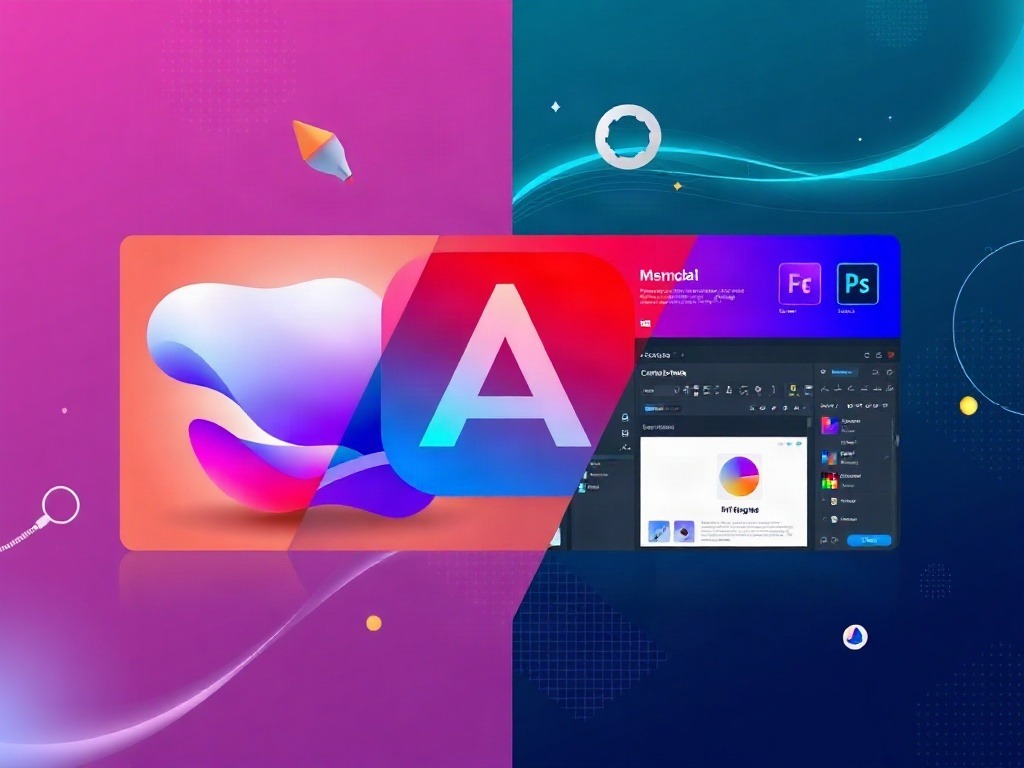
I spent the last three weeks living inside Canva, Adobe Express, and Figma. Not metaphorically—I actually designed a portfolio website mockup, created social media graphics, and built a brand identity using all three. My laptop screen looked like a design tool graveyard by the end.
Here's what surprised me most: the gap between free and paid design software isn't as wide as it used to be. But that doesn't mean these tools are created equal. Some are built for speed. Some for precision. One feels like it was designed by people who actually understand how designers work.
Let me walk you through what I found, what frustrated me, and most importantly—which one you should actually use.
Canva: The Tool That Made Design Accessible (Maybe Too Accessible)
Canva feels like the design tool for people who don't consider themselves designers. It's intuitive. Fast. Occasionally magical. I created a professional LinkedIn banner in literally eight minutes. That's not an exaggeration.
What actually works here:
The template library is absurdly good. We're talking 15,000+ templates across every category imaginable. Whether you need a podcast cover, a wedding invitation, or a business proposal—Canva has it. And these aren't low-quality stock designs. Many are genuinely beautiful. I found myself using templates as starting points rather than editing from scratch, which saved hours.
The drag-and-drop interface is genuinely intuitive. I gave my mom access to my Canva account (regrettable decision, honestly), and she figured out how to resize elements and change colors without asking me a single question. The learning curve is basically nonexistent.
The magic eraser and background remover actually work. I wasn't expecting much here. Tools that promise one-click magic usually deliver disappointment. But Canva's AI removal tools are surprisingly effective—way better than they have any right to be for free software.
Where Canva Falls Apart
Design limitations hit hard once you move beyond templates. The typography options feel constrained. I wanted to kern letters (adjust spacing between characters). Nope. Can't do it. You're working within Canva's design guardrails, and those guardrails are sometimes suffocating.
Precision tools are basically absent. Try aligning elements pixel-perfectly. You'll get frustrated. Fast. I attempted creating a detailed icon system and gave up after twenty minutes of fighting the interface. Canva isn't built for that level of control.
The free version's limitations are real. You get access to most features, but the good fonts? Locked behind Canva Pro. The premium photos? Also locked. You'll constantly hit paywalls. It's not broken-promise territory, but it's aggressive. I used Canva Pro ($13/month) for my tests, and suddenly the tool opened up significantly.
Collaboration on the free tier is limited. You can invite others to view, but editing together requires Pro. That's frustrating when you're working with teammates.
Who Canva Is Actually For
Social media managers. Small business owners who need quick graphics. Students making presentations. People who value speed over flexibility. If you need something done in under 30 minutes and it doesn't require pixel-level precision, Canva is your answer.
Adobe Express: The Underdog That Surprised Me
I went into Adobe Express expecting a watered-down version of Creative Cloud. I was wrong, which happens more than I'd like to admit.
Adobe Express sits in this interesting middle ground—more powerful than Canva, more accessible than Figma. It feels like Adobe actually listened to feedback about their bloated Creative Cloud suite and built something lean.
What actually impressed me:
The generative fill feature is genuinely useful (and it's free, which blew my mind). You select an area of an image and describe what you want. Adobe's AI generates it. I tested this on about fifteen different images, and it worked maybe 70% of the time. That's not perfect, but it's better than I expected. Canva's magic eraser is better, but Express's generative fill is more creative.
The design-to-code feature exists. You can generate HTML/CSS from your designs. I tested it. The output isn't production-ready, but it's a genuinely useful starting point if you're building web projects. No other free tool I tested offers this.
Adobe's photo editing tools are superior to Canva's. The adjustment sliders feel more granular. Color correction actually works properly. This makes sense—Adobe invented Photoshop—but it's still shocking that they included these in the free tier.
The Problems Are Real Though
Performance is inconsistent. Sometimes the interface lags noticeably. I'm running a MacBook Pro with decent specs, so this isn't a hardware issue. It's just... sometimes Adobe Express feels sluggish in ways Canva never does.
The free template selection is significantly smaller than Canva's. We're talking maybe 2,000 templates versus Canva's 15,000. It matters if you're looking for something specific.
Collaboration is basically nonexistent on the free tier. You can share links, but true collaborative editing requires a paid plan. This is a dealbreaker if you work in teams.
The UI is confusing in places. Some features are buried deep in menus. I spent ten minutes looking for the text formatting panel. It shouldn't be that hard. Canva's interface clarity wins here.
Who Should Use Adobe Express
Designers who already use Adobe products. People who need generative fill features. Anyone building web projects who wants design-to-code. If you're doing serious photo editing within a design tool, Express wins. Otherwise, Canva might be the easier choice.
Figma: The Professional Tool That Actually Justifies Free Access
Figma is different. It's not a simplified design tool—it's a full design platform that happens to have a free tier. The distinction matters.
I designed a complete design system in Figma during these three weeks. Components, variants, responsive layouts—the works. This isn't a simplified design toy. This is professional software.
What Makes Figma Special
The component system is exceptional. You build a button once, establish variants (hover state, disabled state, different sizes), and then you can reuse it infinitely. Change the main component, and all instances update automatically. This workflow is miles ahead of Canva or Express. I used to spend hours manually updating recurring elements. Figma eliminated that entirely.
Prototyping is built in. You can create interactive flows, define interactions, and test user journeys without switching tools. I built a prototype of a mobile app in Figma in a single afternoon. Try doing that in Canva—you can't.
Collaboration is actually collaborative. Multiple people can edit the same file simultaneously. We're talking real-time cursor tracking, comments, version history. It's closer to Google Docs than traditional design software. This changes everything when you're working in teams.
The free tier is genuinely usable. You get three projects, unlimited files per project, and essentially all core features. That's actually generous.
The Learning Curve Is Real
Figma assumes you understand design fundamentals. It doesn't hold your hand. I used to think X, but actually spending time in Figma convinced me that this isn't a limitation—it's intentional. Figma respects your intelligence.
The interface is denser than Canva or Express. There are more panels, more options, more complexity. It's not difficult, just concentrated. Someone new to design tools might feel overwhelmed. I watched a colleague struggle for about an hour before everything clicked. Now they won't use anything else.
Design templates are minimal. Figma provides community-created templates, which vary wildly in quality. This is actually fine because Figma is built for creating original work, not remixing templates.
Head-to-Head Breakdown
| Feature | Canva | Adobe Express | Figma |
|---|---|---|---|
| Ease of Use | Excellent | Very Good | Good (steep learning curve) |
| Templates | 15,000+ | 2,000+ | Community (variable) |
| Collaboration | Pro only | Pro only | Free ✓ |
| Design Systems | No | No | Yes ✓ |
| Prototyping | Basic | Very Basic | Excellent ✓ |
| Photo Editing | Good | Excellent ✓ | Basic |
| AI Features | Good | Better ✓ | Growing |
| Best For | Quick graphics | Photo work | Professional design |
My Take
Here's what surprised me: Figma's free tier actually makes Canva feel dated in some ways. Figma's collaboration, components, and prototyping capabilities are game-changing. But Figma also requires you to think like a designer. Canva doesn't. It just lets you make stuff.
Adobe Express felt like the forgotten middle child. It's legitimately useful—especially for photo editing and generative features—but it doesn't have Figma's professional depth or Canva's simplicity. If you're already in the Adobe ecosystem, it's a no-brainer. Otherwise, the other two are stronger choices.
What disappointed me most was how aggressive the paywalls are on Canva and Adobe Express. You're constantly hitting "upgrade to Pro" screens. Figma's free tier feels more genuinely free. You're not nickel-and-dimed at every turn.
I also used to think Figma was only for UI designers. Not true. I built brand guidelines, created illustrations (sort of), and designed print materials. Figma's flexibility surprised me.
The real question isn't which tool is best. It's which tool matches your workflow. They're solving different problems for different people.
Verdict
Use Canva if: You need something done quickly, you're not trained in design, and you value templates over control. Best for social media, presentations, and simple graphics.
Use Adobe Express if: You do photo editing within design work, you want generative AI features, or you're already paying for Adobe services. Middle-ground option with specialized strengths.
Use Figma if: You're building design systems, collaborating with teams, creating prototypes, or doing professional product design. The learning investment pays off immediately.
For most people starting out? Start with Canva. It's the most forgiving, the fastest, and genuinely good at what it does. Graduate to Figma when you hit its limitations. Adobe Express? Only if you have specific needs it solves.
All three are free enough to test. Spend an afternoon in each. You'll know within hours which one fits your brain.
Published by Dattatray Dagale • 18 October 2026








0 Comments