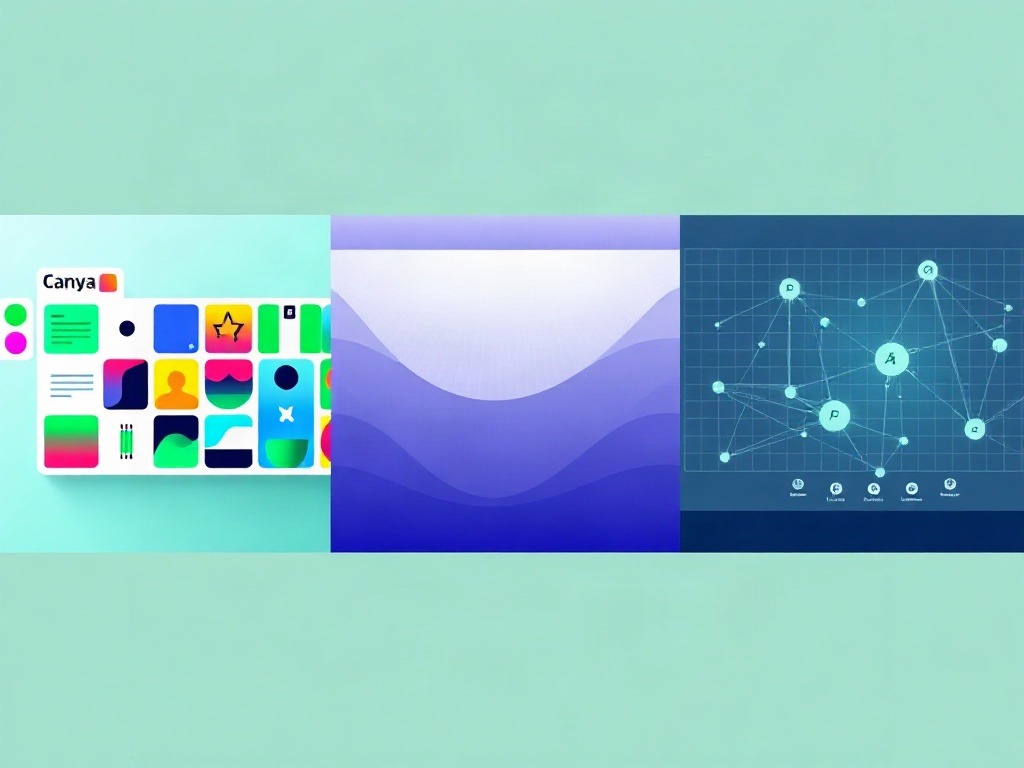
I've spent the last six months living inside Canva, Adobe Express, and Figma. Not because I'm masochistic, but because I genuinely needed to know which one was worth my time—and more importantly, which one I should recommend to people asking me in DMs at midnight.
The honest answer? They're solving different problems, and picking the "best one" is like arguing whether a hammer is better than a screwdriver. But I have strong opinions about which tool you should actually use, based on what you're trying to do.
The Real Difference Nobody Talks About
Here's what nobody tells you upfront: these three tools exist in completely different universes.
Canva is for people who want a result fast. You're not learning design—you're borrowing templates and swapping text. And honestly? That's fine. That's actually the entire point.
Adobe Express sits in the awkward middle. It's trying to be Canva's flexible cousin but also wants to feel premium because it has Adobe's name attached. I used to dismiss it completely, but I've actually warmed up to it for specific tasks (more on that later).
Figma is for people who actually want to design things, not just assemble them. It's a completely different beast—collaborative, component-based, and honestly, it's got more power than most free users will ever need.
Mixing these up is why people get frustrated. You don't buy a Ferrari expecting it to work as a delivery truck.
Canva: The Speedrun Option
What It Actually Does Well
Canva is genuinely incredible at one thing: turning zero design skills into something that looks passable in fifteen minutes. I'm not being sarcastic. I've watched my mom create Instagram posts that look better than stuff people charge money for.
The template library is absurd. Whatever you need—social media graphics, presentations, posters, resumes, even video thumbnails—there's probably a template. And not a bad one. Not a design-school-project one. Actually good ones.
The interface is so intuitive it's almost boring to describe. Drag, drop, change colors, add text, done. You're done. This matters more than you think if you're not a designer.
The collaboration features work fine too. You can share a link, let other people edit, and it actually syncs properly. Not as polished as some tools, but functional.
Where Canva Starts to Annoy Me
The free version keeps nudging you toward premium. Constantly. "Upgrade to unlock this font," "Upgrade to remove background," "Upgrade to use this element." After the hundredth notification, it stops feeling helpful and starts feeling manipulative.
You can technically do a lot for free, but every time you try something slightly ambitious, you hit a paywall. Want to use that specific font for your presentation? Nope. Want to export in that format? Upgrade. It's death by a thousand cuts.
The design customization is also surprisingly shallow if you actually want control. Want to adjust letter spacing precisely? Nope. Want to create a custom grid system? Not happening. You're locked into what the template offers you, which is fine until it isn't.
For recurring use, the Pro plan ($120/year in India, roughly) starts to make sense. But that's a subscription, which matters if money's tight.
Who Should Actually Use Canva
Students making project posters. Small business owners managing social media alone. Anyone who needs "good enough" designs without learning the craft. Canva is genuinely perfect for this.
Adobe Express: The Confusing Middle Child
Why I Used to Ignore It Completely
Adobe Express felt like a product that didn't know what it wanted to be. Too simple for Photoshop users, too limited for Illustrator users, not quite as polished as Canva. I genuinely opened it maybe twice in the first year.
But here's the thing: I was wrong to dismiss it.
Adobe Express is not competing with Canva. It's competing with a very specific problem: "I have a design I created elsewhere, and I need to modify it quickly without learning full Adobe Creative Suite." And honestly? It's better at that than either of the other two.
What Changed My Mind
The generative AI features. Adobe Express has some genuinely useful AI tools built in—background removal, generative fill (similar to Photoshop's magic eraser), and AI-powered design suggestions. These aren't game-changing in isolation, but they're actually implemented well.
More importantly, if you already have an Adobe Creative Cloud subscription (even the cheapest student plan), Express is included. For students especially, this is valuable because you get access to higher-quality assets and some premium features without extra cost.
The interface is cleaner than Canva's in some ways—less cluttered, fewer upsell notifications. It feels more like a tool and less like a marketing engine.
The Problem With Adobe Express
It's still limited. Not in a "designed for simplicity" way like Canva, but in a "we didn't actually finish building this" way.
The template library is smaller. The design flexibility is less than Canva's. The export options are fewer. If you need to do anything slightly unconventional, you'll hit a wall and wish you were using something else.
It also requires a login and feels a bit clunky in the browser. Loading times aren't terrible but they're noticeable in a way Canva's isn't.
Who Should Use Adobe Express
People who already subscribe to Adobe Creative Cloud. People who want AI features without Photoshop's learning curve. Professionals who need to quickly modify designs from other sources. Anyone else? Probably just use Canva.
Figma: The Completely Different Animal
Why Figma Isn't Actually Competing With These Two
Here's what most people don't realize: Figma is a design system and prototyping tool pretending to be a graphic design tool.
You can absolutely use Figma to create a social media graphic. But that's like using a spreadsheet to write a novel—technically possible, wildly inefficient.
Figma's free tier is phenomenal, though. Honestly. I've seen design students and freelancers create incredible work on the free plan alone. You get unlimited projects, three files at a time, real-time collaboration, and component libraries. For web and UI design specifically, it's brutal that Adobe charges so much for these features.
What Makes Figma Actually Special
Collaboration. This is where Figma embarrasses the other two tools. You can have three people editing the same file simultaneously, and it actually works smoothly. No waiting, no version conflicts, just actual real-time teamwork.
Components and design systems. If you're building something with repeating elements, Figma lets you create a master component and update everything at once. This is professional-level stuff that Canva can't touch.
Prototyping and interaction design. You can create clickable prototypes, test user flows, and share interactive links. Again—Canva's not even in this category.
The learning curve is steeper, but it's worth it. Most people can do basic work within an hour.
The Honest Limitation
Figma's free tier caps you at three active files. If you're a prolific designer or designer building multiple projects, you'll hit that limit fast and need to archive old work. The $12/month Pro plan removes that restriction, but it's still a cost.
Also—and I could be wrong here—but Figma assumes some baseline design knowledge. You're not going to open it and instinctively know what to do like you would with Canva. You might not even know where to start.
Who Absolutely Should Use Figma
Designers. UI/UX people. Anyone building digital products. Teams that need to collaborate on designs. Students learning product design. If you're doing social media graphics, you're using the wrong tool.
| Feature | Canva | Adobe Express | Figma |
|---|---|---|---|
| Best For | Social media, quick graphics | Adobe users, AI edits | UI design, collaboration |
| Learning Curve | Nearly zero | Very low | Moderate |
| Template Library | Massive | Small | Minimal |
| Design Control | Limited | Moderate | Unlimited |
| Real-time Collaboration | Basic | Limited | Excellent |
| Free Tier Quality | Good (but paywalled) | Decent | Excellent |
| Cost for Power Users | ₹9,600/year | ₹1,440/year (or Adobe CC) | ₹1,440/year (optional) |
My Take
I'm surprised by how much I've warmed to Adobe Express, honestly. I went in skeptical and came out thinking it occupies a legitimate niche—for existing Adobe users especially, it's legitimately good.
What disappointed me most was Canva's aggressive monetization strategy in the free tier. I get that they need to make money, but the constant upsells feel disrespectful to users who are genuinely trying to make something. It's turned what could be a truly generous free tool into something that feels designed to frustrate you into paying.
Figma surprised me in the opposite direction. The free tier is genuinely generous. For what it offers—real collaboration, professional-grade tools, component systems—it's almost shocking that it's free. They're betting on users upgrading as they grow, which is a smarter strategy than Canva's "let's block every other feature" approach.
The real insight? Stop thinking of these as alternatives. They're not. Pick the one that matches what you actually do. Don't use Figma for Instagram graphics. Don't use Canva if you need precision control. Don't use Adobe Express if you don't already have an Adobe account. That's it.
Verdict
Use Canva if: You need fast, template-based designs for social media or quick projects. Accept the premium limitations and budget for the subscription if you use it regularly.
Use Adobe Express if: You already subscribe to Creative Cloud, or you need AI-powered editing features without Photoshop's complexity.
Use Figma if: You're actually designing (not just assembling), working with teams, or building digital products. The free tier is genuinely generous enough for most individual use cases.
If I had to pick one for a student or someone just starting out with zero budget? Figma. The free tier is so robust that you're not hitting paywalls constantly, and you're actually learning real design skills instead of just using templates.
But if you need something up in five minutes for a client? Canva. It's irritating, but it's unbeatable at that specific job.
Published by Dattatray Dagale • 23 September 2026








0 Comments