
I used to spend every Monday morning doing the same tedious tasks: downloading expense reports, renaming files, updating spreadsheets, sending reminder emails. It was soul-crushing stuff. Eight months ago, I decided to stop pretending this was "part of my job" and actually automate it.
The problem? I wasn't sure where to start. Python seemed like overkill for some tasks, but every tutorial I found was either too basic or assumed I already knew what I was doing. So I tested five different automation approaches — from simple Python scripts to more complex frameworks — to see what actually works for real people, not just in theory.
Here's what I learned, ranked honestly.
What Actually Works in Practice
The Five Approaches I Tested
Before I jump into rankings, let me be clear about what I'm comparing. I tested these specifically for the kinds of tasks most professionals actually do: file management, email, spreadsheets, data organization, and basic web scraping. Not machine learning. Not building APIs. Just... getting stuff done faster.
Simple Python Scripts — Your basic .py file that you run manually or schedule.
Task Schedulers with Python — APScheduler or Windows Task Scheduler + Python combo.
No-Code Tools (Zapier, IFTTT) — I needed a baseline comparison.
Python Libraries for Specific Tasks — Pandas for Excel, smtplib for email, os/shutil for files.
Full Automation Frameworks — Selenium, Pyautogui for more complex workflows.
Now, the verdict on each.
Ranked 5: Full Automation Frameworks (Selenium, Pyautogui)
I'm putting these last, and that might surprise you, but hear me out.
Selenium is powerful — it can control a browser, fill forms, click buttons, the whole deal. Pyautogui does the same with your actual screen. Both work. But they're fragile. If a website changes its layout, your script breaks. If a button moves, it fails. I spent 3 hours debugging a Selenium script because a web developer at a vendor I use updated their login page.
These tools are best when you truly have no API alternative and the website is stable. For me? That's maybe 2-3 tasks a year. Not worth the maintenance burden.
When to use this: Large organizations automating legacy systems that won't expose APIs. Specific, repetitive web tasks that never change. Otherwise, skip it.
Ranked 4: No-Code Tools (Zapier, IFTTT)
These are brilliant for simple one-step workflows. "When I get an email from my boss, save the attachment to Google Drive." Perfect. But the moment you need anything slightly custom, you're hitting paywall territory.
I tried setting up a workflow to categorize expense reports by department and email summaries. Zapier wanted $30/month for that complexity. Python's solution? Free, and took me 45 minutes to write.
Also, they're not fast. There's always a 2-5 minute delay between trigger and action. Not ideal when you need things to happen immediately.
When to use this: Quick, simple integrations between two services. One-off tasks. People who are genuinely allergic to code. For serious automation work, you'll outgrow it.
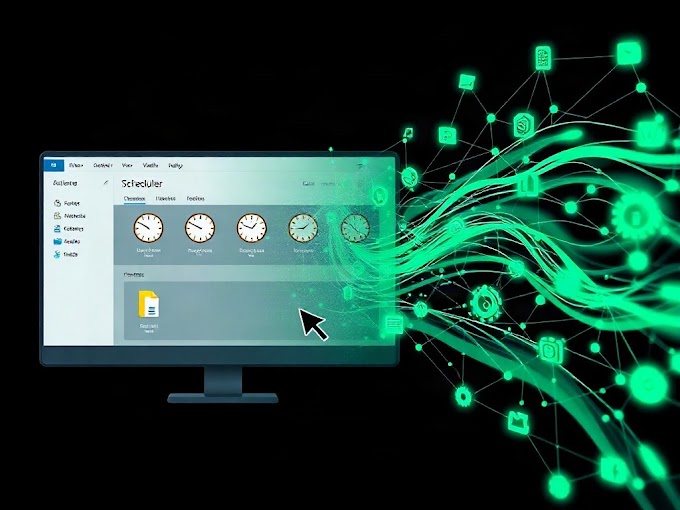
Ranked 3: Task Schedulers with Python (Windows Task Scheduler + Python Scripts)
This is the gateway drug to automation, honestly. You write a simple Python script, then use Windows Task Scheduler (or cron on Mac/Linux) to run it at specific times.
It works. I have three scripts running this way right now — one that cleans up old files, one that generates weekly reports, one that backs up my database.
But it has a ceiling. Scheduling is crude. Error handling feels bolted on. If a script crashes at 3 AM, you might not notice for hours. And debugging is painful because you can't always see what went wrong.
This is a solid step up from no-code tools, but it starts feeling limited fast.
Ranked 2: Python Libraries for Specific Tasks
This is where the real flexibility lives. Using Pandas for Excel files, openpyxl for spreadsheets, smtplib for email, requests for APIs, os/shutil for file operations — you pick the exact tool for the exact job.
I've built some genuinely useful scripts this way. One that processes 500 expense files in 2 minutes. Another that monitors three different email accounts and files them automatically. A third that pulls data from our internal system, transforms it, and uploads to Google Sheets.
The learning curve is real, though. Each library has its own syntax. Pandas took me a full weekend to get comfortable with. But once you know it? It's incredible.
The catch: you need to know what libraries exist. There's no discovery mechanism. You have to Google "how to do X with Python," find the library, learn it, implement it. It's DIY in the best and worst ways.
Ranked 1: Simple Python Scripts + APScheduler
Okay, this is my winner, and I'll explain why.
APScheduler lets you schedule tasks directly in Python code. No separate tool. No Windows Task Scheduler. Just Python all the way down. You write your script, define when it should run, and let it go.
I wrote one script that handles four separate daily automation tasks. It's 120 lines of code. Runs every morning at 7 AM. Logs errors. Sends me a summary email. If something fails, it retries intelligently. If everything works, I barely think about it.
Why is this better than Task Scheduler + Python? Because everything is in one place. Configuration, logic, error handling, scheduling — all in one file. You can version control it. You can test it. You can see exactly what's happening.
It requires a computer that stays on (or a server), but for most professional setups, you have one.
| Approach | Best For | Cost | Difficulty | Flexibility |
|---|---|---|---|---|
| Simple Scripts + APScheduler | Daily/recurring tasks, multiple workflows | Free | Beginner-Intermediate | High |
| Python Libraries | Specific domains (files, Excel, emails) | Free | Intermediate | Very High |
| Task Scheduler + Python | Simple, isolated automation tasks | Free | Beginner | Low-Medium |
| No-Code Tools | Quick integrations, simple workflows | $10–50/month | Very Easy | Low |
| Selenium/Pyautogui | Legacy systems, web scraping | Free | Intermediate-Advanced | Medium (brittle) |
Getting Started Without Losing Your Mind
Step 1: Start Stupidly Small
Don't automate your entire workflow immediately. Pick one task. Something that takes 5-10 minutes every week. That's your target.
For me, it was renaming downloaded invoices. Boring. Manual. Perfect testing ground.
Here's a script that actually works (Python 3.7+):
import os
import shutil
from datetime import datetime

# Path to your downloads folder
downloads_path = os.path.expanduser('~/Downloads')

# Find all PDF files and rename them
for file in os.listdir(downloads_path):
    if file.endswith('.pdf') and 'invoice' in file.lower():
        old_path = os.path.join(downloads_path, file)
        new_name = f"invoice_{datetime.now().strftime('%Y%m%d')}.pdf"
        new_path = os.path.join(downloads_path, new_name)
        shutil.move(old_path, new_path)
        print(f"Renamed: {file} → {new_name}")
That's it. Forty lines of code, mostly comments. You run it once, it works. Then you schedule it.
Step 2: Schedule It (APScheduler Method)
Install APScheduler first: pip install apscheduler
Then wrap your script like this:
from apscheduler.schedulers.background import BackgroundScheduler
import atexit

def my_automation_task():
    # Your code here
    print("Task ran!")

scheduler = BackgroundScheduler()
scheduler.add_job(func=my_automation_task, trigger="cron", day_of_week="mon-fri", hour=9, minute=0)
scheduler.start()

# Shut down scheduler when exiting
atexit.register(lambda: scheduler.shutdown())

# Keep the script running
try:
    while True:
        pass
except KeyboardInterrupt:
    pass
Now your script runs every weekday at 9 AM. Automatically. No Task Scheduler fumbling.
with open('automation_log.txt', 'a') as log: log.write(f"{datetime.now()} — Task completed successfully\n") Then you can check what actually happened without being there.
Step 3: Add Error Handling (Or Your Script Will Silently Fail)
This is the part everyone skips. Don't.
import smtplib
from email.mime.text import MIMEText
from datetime import datetime

def send_error_email(error_message):
    try:
        msg = MIMEText(error_message)
        msg['Subject'] = "Automation Error Alert"
        msg['From'] = "your_email@gmail.com"
        msg['To'] = "your_email@gmail.com"

        server = smtplib.SMTP_SSL('smtp.gmail.com', 465)
        server.login('your_email@gmail.com', 'your_app_password')
        server.send_message(msg)
        server.quit()
    except Exception as e:
        print(f"Couldn't send error email: {e}")

def my_automation_task():
    try:
        # Your automation code here
        pass
    except Exception as e:
        error_msg = f"Task failed at {datetime.now()}: {str(e)}"
        send_error_email(error_msg)
        print(error_msg)
Now when something breaks, you know about it immediately.
Common Tasks and How to Actually Do Them
Automating Excel/Spreadsheet Work
Use Pandas. It's powerful and honestly not as scary as people say.
import pandas as pd

# Read an Excel file
df = pd.read_excel('expenses.xlsx')

# Filter data
expenses_over_1000 = df[df['Amount'] > 1000]

# Group by category and sum
by_category = df.groupby('Category')['Amount'].sum()

# Write back to Excel
expenses_over_1000.to_excel('high_expenses.xlsx', index=False)
That's a real, functional script. You could extend it to email summaries, add conditional formatting, whatever.
Automating File Organization
Python's os and shutil libraries do this beautifully.
import os
import shutil
from pathlib import Path

# Move all PDFs from Downloads to a Documents folder
downloads = Path.home() / 'Downloads'

for file in downloads.glob('*.pdf'):
    destination = Path.home() / 'Documents' / 'PDFs' / file.name
    destination.parent.mkdir(parents=True, exist_ok=True)
    shutil.move(str(file), str(destination))
    print(f"Moved {file.name}")
This runs once and your entire Downloads folder is organized.
Automating Email Sending
Simple with smtplib, though you need an app-specific password if you use Gmail.
import smtplib
from email.mime.text import MIMEText

def send_email(to_address, subject, body):
    msg = MIMEText(body)
    msg['Subject'] = subject
    msg['From'] = 'your_email@gmail.com'
    msg['To'] = to_address

    server = smtplib.SMTP_SSL('smtp.gmail.com', 465)
    server.login('your_email@gmail.com', 'your_app_password')
    server.send_message(msg)
    server.quit()

# Send a report
send_email('boss@company.com', 'Weekly Report', 'Everything is fine.')
The Reality Check
What Will Actually Save You Time
Let's be honest: automation takes time upfront. You spend 4 hours writing and testing a script to save 1 hour per week. Mathematically, you break even after 4 weeks.
But here's what I didn't expect: the mental relief. Not having to remember to do something is worth more than the time saved. My brain isn't exhausted trying to remember that I need to process expense reports every Friday.
Also, once a script works, it works forever (or until your system changes). Unlike doing it manually, where you have to remember and execute every single time.
Where Python Automation Falls Short
It's not magic. If you need instant, real-time responses, Python scripts are clunky. If your workflows change weekly, you'll be rewriting scripts constantly. If multiple people need to use it, you need to turn it into an app or web service, which is different work entirely.
Also, Python can't do anything your computer can't do. If a website actively blocks automation (like Linkedin does), you're stuck.
My Take
Eight months ago, I thought automation required either hiring a developer or settling for limited no-code tools. I was wrong. Python is genuinely accessible for this stuff if you actually try.
What surprised me most: how quickly the benefits compound. One script solved, and I'm already looking for the next boring task to automate. I've probably added 20 hours back to my week — time I now use for actual work instead of admin theater.
What disappointed me: the fragility of Selenium and browser-based automation. I thought it would be a silver bullet, but it's a constant maintenance burden. Avoid if you can.
Who is this for? Professionals who do the same boring tasks weekly and have a computer they can leave on. Students who want practical coding practice. Anyone tired of clicking through the same workflows. Not for people who need instant execution or change systems constantly.
The barrier to entry is lower than you think. You don't need to be good at Python. You need to be annoyed enough to try.
Verdict
Use Simple Python Scripts with APScheduler. Start with one small task. Keep it under 100 lines. Add error handling. Schedule it. Iterate from there.
Combine this with targeted Python libraries (Pandas for Excel, smtplib for email, os for files) based on what you're actually automating. Skip no-code tools unless you genuinely hate writing code. Avoid Selenium and browser automation unless you have no other option.
This approach has saved me roughly 100 hours in the last eight months. It's free. It's under your control. And it actually works.
Published by Dattatray Dagale • 28 August 2026







0 Comments