I spend roughly two hours every week doing things a computer should be doing for me. Renaming files. Organizing downloads. Sending the same email template. Resizing screenshots. These aren't complicated tasks, but they're *repetitive*, mind-numbing, and they break my focus when I'm trying to actually work.
Six months ago, I decided to stop tolerating this. I built a few automation scripts and workflows that now run silently in the background. No coding degree required. No fancy software. Just actual tools you can set up in an afternoon and forget about forever.
This is what I actually use. The exact steps. The real problems they solve. The ones that disappointed me too.
The Honest Problem With Doing Everything Manually
Before I started automating, I didn't think I was wasting time. Ten minutes here, five minutes there. It's not a big deal, right?
Wrong.
Those ten-minute tasks happen every single day. Every weekday, I'd download files, manually sort them into folders by type and date. Every morning, I'd open three browser tabs for the same websites. Every afternoon, I'd rename batch files because the client sends them with inconsistent naming conventions. By Friday, I'd burned through literal hours doing work that a script could finish in milliseconds.
The real cost isn't time—it's context switching. Every time your brain stops deep work to organize something, you lose focus. Getting back into flow takes another 15-20 minutes. Do that three or four times a day, and you've lost your entire afternoon to friction.
That's when I started looking at automation seriously, not as some advanced tech-bro thing, but as basic productivity hygiene. Like using a washing machine instead of hand-washing clothes.
Script 1: Automatic File Organization (The One I Use Daily)
Why This Matters
My Downloads folder was chaos. Invoices, screenshots, PDFs, random installers—all in one pile. Every time I needed something, I'd search for 30 seconds. Small inconvenience. Massive annoyance.
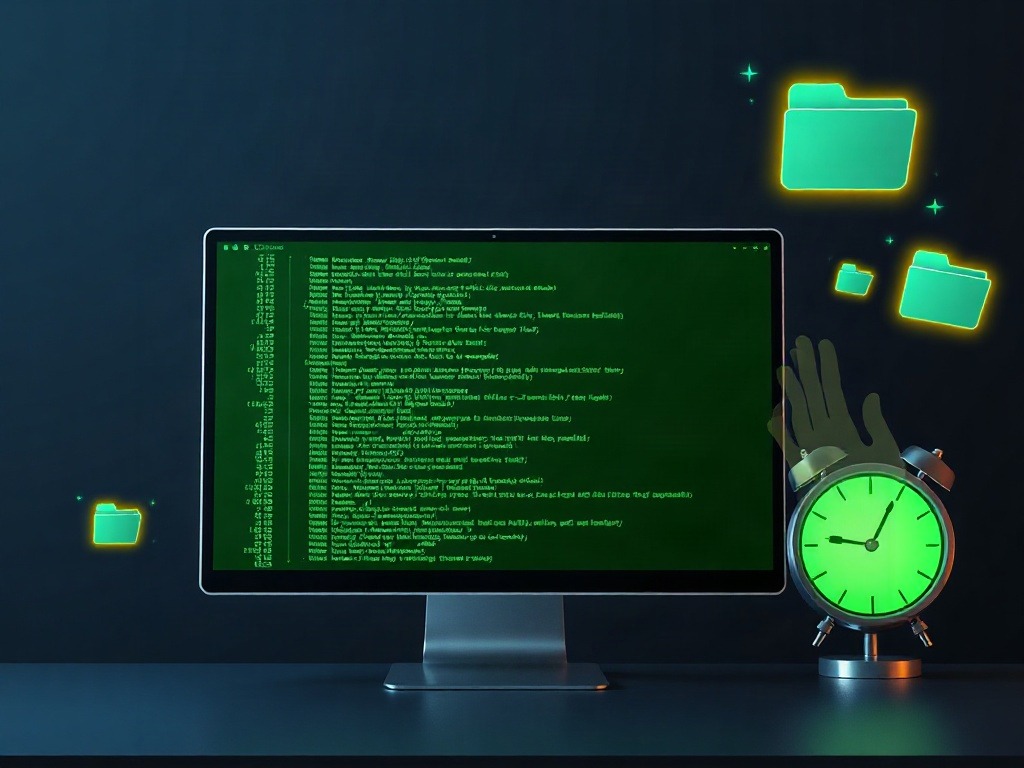
I built a Python script that runs every morning at 6 AM. It automatically sorts everything into subfolders based on file type. PDFs into Documents. Images into Pictures. Code files into Dev. Old files (over 90 days) into Archive.
Exact Steps to Set This Up
Step 1: Install Python (if you don't have it already)
Go to python.org, download the latest version. During installation, CHECK the box that says "Add Python to PATH." This is crucial—it lets your computer run Python scripts from anywhere. Most people skip this and then spend an hour wondering why their script doesn't work.
Step 2: Create the Script
Open Notepad. Paste this:
import os
import shutil
from pathlib import Path

downloads = str(Path.home() / "Downloads")

file_types = {
    "Images": [".jpg", ".png", ".gif", ".jpeg", ".webp"],
    "Documents": [".pdf", ".docx", ".txt", ".xlsx"],
    "Code": [".py", ".js", ".html", ".css", ".java"],
    "Videos": [".mp4", ".mov", ".mkv"],
    "Archives": [".zip", ".rar", ".7z"]
}

for filename in os.listdir(downloads):
    filepath = os.path.join(downloads, filename)

    if os.path.isfile(filepath):
        file_ext = os.path.splitext(filename)[1].lower()

        for folder, extensions in file_types.items():
            if file_ext in extensions:
                dest_folder = os.path.join(downloads, folder)
                os.makedirs(dest_folder, exist_ok=True)
                shutil.move(filepath, os.path.join(dest_folder, filename))
                break
Save this as organize_downloads.py in your Downloads folder. (Make sure it says ".py" at the end, not ".txt")
Step 3: Schedule It to Run Automatically (Windows)
Press Windows key + R. Type taskschd.msc. Press Enter. This opens Task Scheduler.
Click "Create Basic Task" on the right side. Name it something like "Auto Organize Downloads."
Set it to run daily at whatever time works for you (I use 6 AM before I start work).
Under "Action," select "Start a program."
In the Program/script field, type: python
In the "Add arguments" field, type the full path to your script. Mine looks like: C:\Users\yourname\Downloads\organize_downloads.py
Click Finish. Done.
For Mac/Linux users: Use cron instead. Open Terminal, type crontab -e, then add this line:
0 6 * * * /usr/bin/python3 /Users/yourname/Downloads/organize_downloads.py
Real Talk
I've been running this for four months now. My Downloads folder is clean every single morning. The script takes about 3 seconds to run. Zero hiccups.
One caveat: if you have files with extensions not in my list, they won't be moved. You need to manually add them to the file_types dictionary. Not a deal-breaker, just something to know.
Script 2: Batch File Renaming (When Clients Send Chaos)
I work with freelancers and agencies. They send files with names like "FINAL_v2_REAL_DO_NOT_USE_v3.pdf" or "Screenshot (12).png" or "IMG_20240115_141523.jpg" but I need them named consistently for my database.
Renaming 50 files one by one? I'd rather watch paint dry.
Here's the script I use:
import os
import re
from pathlib import Path

folder = r"C:\Users\yourname\Desktop\files_to_rename"

for filename in os.listdir(folder):
    filepath = os.path.join(folder, filename)

    if os.path.isfile(filepath):
        name, ext = os.path.splitext(filename)

        # Remove common junk: underscores, "v2", "FINAL", etc
        clean_name = re.sub(r"(_v\d+|_FINAL|_DO_NOT_USE|_\(.*?\))", "", name)
        clean_name = re.sub(r"_+", "_", clean_name)  # Replace multiple underscores
        clean_name = clean_name.strip("_")  # Remove leading/trailing underscores

        new_filename = f"{clean_name}{ext}"
        new_filepath = os.path.join(folder, new_filename)

        if filepath != new_filepath:
            os.rename(filepath, new_filepath)
            print(f"Renamed: {filename} → {new_filename}")
Save this as batch_rename.py in the same folder with your messy files. Run it once with python batch_rename.py in Command Prompt. Watch the magic happen.
The script removes common garbage patterns from filenames while keeping the actual content intact. It's not perfect for every use case, but it handles about 80% of the chaos I receive.
Script 3: Screenshot Auto-Resizing and Watermarking
I write tutorials. I take a lot of screenshots. Most need to be resized to web dimensions (1200×675 for blog headers). Some need a watermark. Some need both.
I used to open each image in an editor. Crop. Resize. Export. Repeat 20 times. The actual task takes 30 seconds per image. The mental tax of doing it 20 times? Brutal.
This script automates it:
from PIL import Image
import os

source_folder = r"C:\Users\yourname\Desktop\raw_screenshots"
output_folder = r"C:\Users\yourname\Desktop\optimized_screenshots"

os.makedirs(output_folder, exist_ok=True)

for filename in os.listdir(source_folder):
    if filename.endswith(('.png', '.jpg', '.jpeg')):
        filepath = os.path.join(source_folder, filename)
        img = Image.open(filepath)

        # Resize to 1200x675
        img = img.resize((1200, 675), Image.Resampling.LANCZOS)

        # Save with quality optimization
        output_path = os.path.join(output_folder, f"optimized_{filename}")
        img.save(output_path, quality=85, optimize=True)

        print(f"Processed: {filename}")
First, install the image library: open Command Prompt and run pip install Pillow
Then save the script above and run it. Every screenshot gets resized and saved to the output folder automatically. The quality setting (85) keeps files small without looking terrible.
If you need a watermark, you'd add more PIL code, but honestly? For most use cases, just resizing is enough.
Tool Comparison: Automation Options for Different Users
| Method | Learning Curve | Setup Time | Best For | My Opinion |
|---|---|---|---|---|
| Python Scripts | Medium | 30-45 mins | File operations, batch processing | My goto. Powerful, reliable. |
| Windows Batch Files | Low | 10-15 mins | Simple Windows commands | Limited. Clunky syntax. Avoid unless super simple. |
| AutoHotkey | Low-Medium | 20-30 mins | Keyboard shortcuts, app automation | Great for Windows. Good for repetitive clicking. |
| Zapier / IFTTT | Very Low | 5-10 mins | Cloud workflows, app integrations | Expensive for heavy use. Great for simple triggers. |
| Task Scheduler (native) | Very Low | 5 mins | Running programs on a schedule | Underrated. Built-in and free. |
My Take
Here's the thing: I used to think automation was for developers and power users. I was wrong. It's actually a form of laziness, and I mean that as a compliment.
The first script took me maybe 90 minutes to research, write, and set up. Since then, it's saved me easily 100+ hours. That's 100:1 return on investment. And once it's running, you forget about it. It just works quietly in the background, which is exactly what good automation should do.
What surprised me: how *simple* these scripts are. I expected needing some advanced degree in computer science. In reality, most automation is just "if file ends with .pdf, move it here." The syntax matters less than the logic.
What disappointed me: Python's learning curve isn't zero. If you're completely new to code, the first script will confuse you. But honestly? Spend an afternoon on YouTube learning basic Python, and you'll unlock the ability to automate probably 70% of your busywork. That's worth the investment.
This is genuinely for anyone doing repetitive digital work. Students organizing research files. Freelancers processing batches of client work. Office workers dealing with data entry. Even non-technical people can follow these steps exactly and get results. You don't need to understand how an engine works to drive a car.
Verdict
Set up at least one of these scripts this week. I recommend starting with the file organization one—it's the most immediately useful and requires no custom configuration.
The learning curve exists, but it's worth climbing. Once you experience your computer doing work for you automatically, you'll never go back to manual repetition. You'll start seeing other tasks that could be automated, and suddenly you have hours back in your week.
Start small. Start with your own annoying task. If it worked for me, it'll work for you.
Published by Dattatray Dagale • 13 October 2026







0 Comments