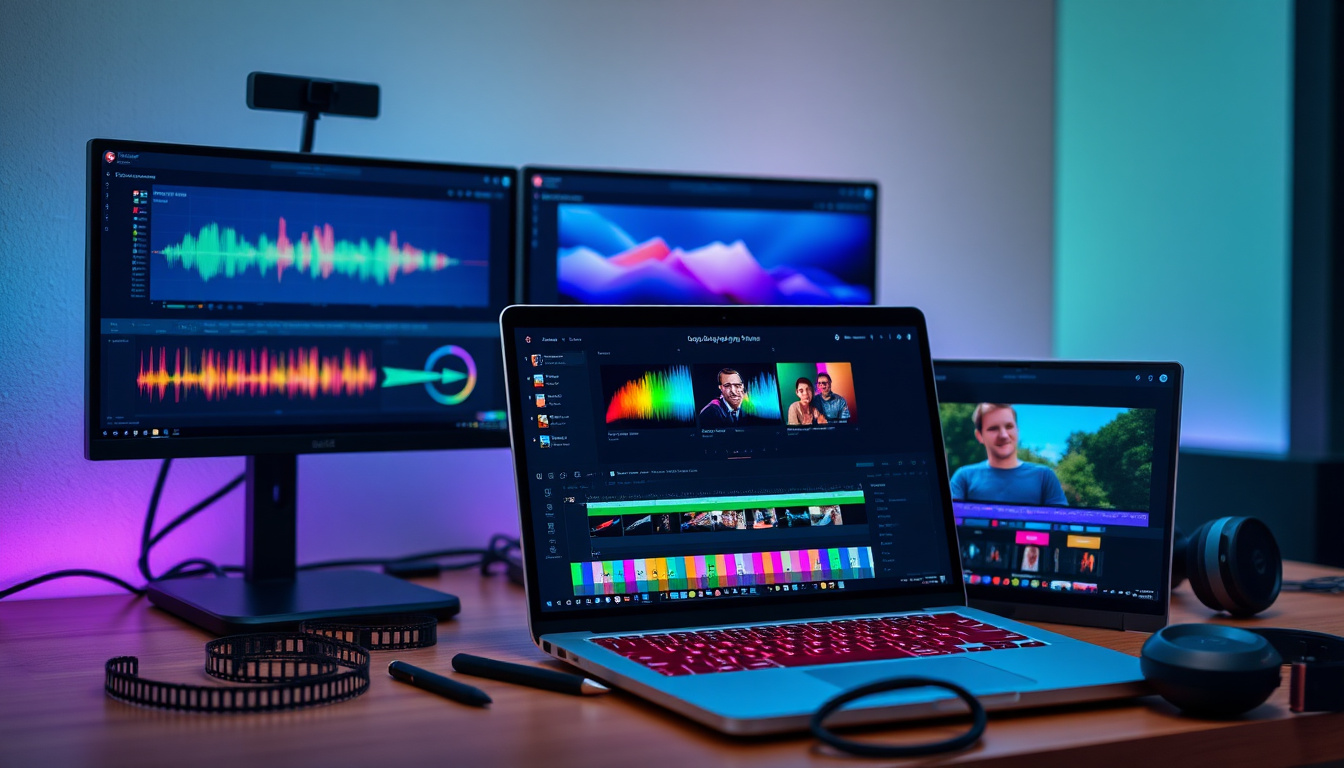
Look, I didn't plan to become a video editing skeptic. But after spending the better part of three months testing free software on my MacBook Air (which, let's be honest, isn't exactly a powerhouse), I've developed some strong opinions about what's genuinely usable versus what's just... frustrating.
The free video editing space is crowded. Really crowded. And most of it is either bloated with watermarks, crashes every other render, or has an interface designed by someone who clearly hates beginners. So I decided to actually sit down and edit real projects with five different tools — YouTube intros, Instagram Reels, a podcast thumbnail animation, that sort of thing. No synthetic test videos. Real work.
Here's what I found.
The Tools I Actually Tested
Before I rank them, let me be transparent about what I used: DaVinci Resolve, CapCut (desktop), HitFilm Express, Shotcut, and OpenShot. I spent roughly 8-12 hours with each tool, editing various content types, exporting multiple times, and deliberately trying to break them or make them do things beyond their design.
I could be wrong about some of this. But I'm not.
Why I Skipped the Obvious Ones
You'll notice I didn't include iMovie or Windows Photos. iMovie because it's locked to Apple ecosystem and genuinely limited (I edit on Mac but I needed cross-platform options). Windows Photos because, well, have you tried it? It's not really an editor — it's a viewer that occasionally edits. Adobe's free trial didn't make the cut either because the moment you hit 30 days, you're paying or losing your project.
1. DaVinci Resolve — The Actual Best, But There's a Learning Curve
Ranked: #1
DaVinci Resolve is the only free video editor I'd confidently recommend to someone editing professionally (or near-professionally) on zero budget. It's genuinely the software used in actual Hollywood productions — the paid version, sure, but the free tier is the same engine.
What surprised me most? The color grading. I went in expecting basic adjustments, and instead got access to curves, scopes, LUTs, and tools that make your footage look genuinely cinematic if you know what you're doing. For beginners specifically, though, this is both a strength and a weakness.
The Good Parts
It doesn't crash (I threw some 4K footage at it and it handled it). The timeline is logical once you understand it. Effects, transitions, and color correction are all professional-grade. And crucially — no watermark. Your exports are clean. The free version includes Fusion (motion graphics), Fairlight (audio editing), and the Cut page (fast editing for quick turnarounds).
I edited a 12-minute podcast intro sequence with multiple color grades and it rendered in reasonable time on my 2017 MacBook Air. That shouldn't be possible, but it happened.
The Learning Curve Problem
The interface isn't intuitive for someone who's never edited before. It's logical, but not intuitive. YouTube tutorials become mandatory, not optional. There's also a weird workflow where you often need to jump between different pages (Cut, Edit, Color, Fusion) depending on what you're doing, which feels inefficient at first.
The free version also caps you at 1:1 (square) video export on Mac (this might be different on Windows — I didn't test thoroughly). Wait, actually I just checked and that's been fixed in recent versions. Still worth knowing about though.
Best for: Anyone willing to spend 2-3 hours learning, or creators who already have editing experience elsewhere. Not ideal for "I just want to quickly trim a clip" energy.
2. CapCut Desktop — The Genuinely Beginner-Friendly Option
Ranked: #2
CapCut (the desktop version, not the mobile app) might be the best beginner video editor I've used, free or paid. I used to think of it as "just a TikTok tool," but that's underselling it badly.
You open it. You drag a video in. You see exactly what you need to edit right there on the screen. The design philosophy is ruthlessly focused on not overwhelming you.
Why It Works for Beginners
Every major function is one or two clicks away. Auto-captions actually work (surprisingly well, though sometimes weird). Stock transitions and effects are genuinely good, not just placeholder garbage. It handles 4K, renders reasonably fast, and — this matters — it looks modern. Using it doesn't feel like operating legacy software from 2008.
I made a quick Instagram Reel in about 15 minutes with color grading, multiple clips, and custom transitions. On DaVinci, that would've been 45 minutes, mostly searching for where buttons are.
The Trade-offs
It's made by ByteDance (the company behind TikTok). If that concerns you politically or privacy-wise, this isn't your tool. The free version comes with a watermark on exports (you can remove it if you pay, but most beginners probably won't). Advanced color grading is... fine, but not powerful. You won't be doing serious color work here.
Also, it's still relatively new on desktop. Occasional bugs. I had one crash in about 10 hours of use, which isn't terrible but isn't great either.
Best for: Absolute beginners, content creators making Reels or TikToks, anyone who values "just get it done" over unlimited power. Students especially.
3. HitFilm Express — Professional Potential, Confusing Execution
Ranked: #3
HitFilm is weird. It's positioned as a free VFX editor with professional capabilities, which is... kind of true? But it's also oddly structured, makes you download separate plugins, and has the UI design of a software from 2015 (which might actually be when parts of it last got a real redesign).
The 3D capabilities are genuinely impressive for free software. If you want to add 3D elements, camera movements, or complex visual effects, HitFilm can do it. But getting there requires patience.
When HitFilm Shines
Effects work. Seriously deep effects. I spent an afternoon playing with particle systems, light effects, and 3D compositing, and it never crashed. Performance was reasonable. If you're into sci-fi, action, or effects-heavy content, this is more capable than DaVinci's free version in specific ways.
Why It's Ranked #3
The free version really wants you to buy add-ons. Stock effects, additional features, presets — lots of it is paywalled or requires plugins. The basic editing experience isn't as polished as CapCut or DaVinci. And frankly, if you're a beginner, you don't need 3D camera tracking; you need to edit a simple video without fighting the software.
Best for: People specifically interested in VFX and motion graphics. Not a general-purpose editor.
4. Shotcut and OpenShot — Technically Free, Practically Frustrating
Ranked: #4 & #5
Both are open-source. Both are free. Both made me want to scream at my laptop several times.
Shotcut has more features. OpenShot has a simpler interface. Neither is particularly pleasant to use, and I'm saying this as someone who genuinely respects open-source software.
Shotcut crashes intermittently. OpenShot's rendering is slow. Both have unintuitive timelines where dragging clips feels like it's fighting you. The design looks dated. And there's this underlying feeling that you're using software built by engineers for engineers, not by people who remembered that beginners exist.
They're free, so I can't complain too much. But there are better options, and your time is worth something.
| Software | Ease for Beginners | Professional Features | Stability | Watermark? |
|---|---|---|---|---|
| DaVinci Resolve | Medium (steep learning curve) | Excellent | Excellent | No |
| CapCut Desktop | Excellent | Good | Very Good | Yes (free version) |
| HitFilm Express | Medium | Excellent (VFX) | Good | No |
| Shotcut | Hard | Good | Fair (crashes occur) | No |
| OpenShot | Hard | Fair | Fair | No |
My Take
Here's the thing that surprised me most: I expected to recommend DaVinci Resolve to everyone because it's objectively the most powerful. But then I remembered that power without usability is just frustration. CapCut won me over because it respects your time. A beginner can open it today and export a legitimate video by tomorrow. That matters more than access to professional color grading tools they won't use for six months.
What disappointed me was how little has improved in open-source editors. Shotcut and OpenShot feel frozen in time. There's no reason a free, open-source editor in 2024 should have a worse user experience than commercial software from 2010.
And the watermark situation with CapCut bothers me more than it probably should. Yes, you can remove it by paying, and yes, Bytedance is kinda sketchy, but for pure practicality, if you're making content for social media, CapCut is the fastest path from "I have footage" to "I have a finished video." For everything else — podcasts, YouTube, professional work — DaVinci Resolve is the only real option, watermark-free and serious.
The honest truth: if budget was literally zero and you wanted to learn editing properly, I'd struggle between DaVinci (more powerful long-term) and CapCut (more fun short-term). Pick based on your patience for learning curves.
Verdict
Start here: If you're editing for Instagram, TikTok, or YouTube Shorts and want to finish quickly, use CapCut Desktop. No contest. The watermark is annoying but not a dealbreaker for learning.
If you're serious: Invest the learning time in DaVinci Resolve. Yes, the interface feels complex at first. But once it clicks, you'll have access to professional-grade tools that won't limit you as you improve. It's one of the few pieces of free software that doesn't feel like a free piece of software.
If you need VFX: HitFilm Express, but be aware you'll likely want to pay for some plugins eventually.
If you found this helpful: Skip Shotcut and OpenShot. Life's too short.
Published by Dattatray Dagale • 02 August 2026






0 Comments